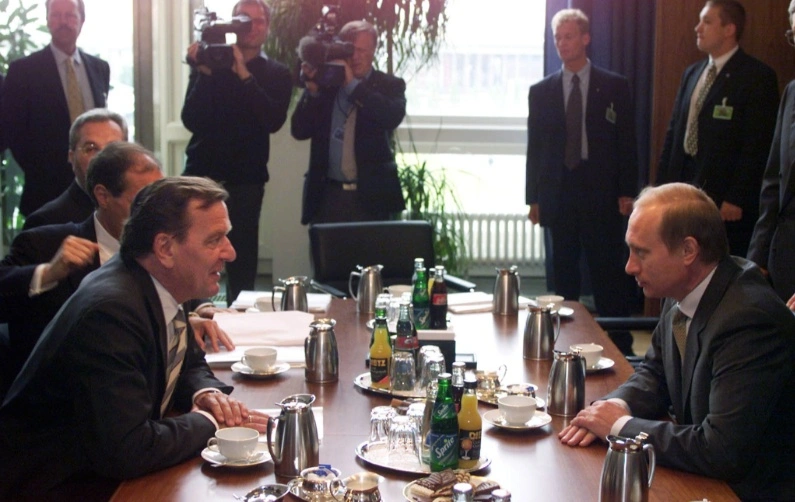
Former German Chancellor Schröder criticised for attending Putin's birthday
Section: News
In a significant escalation of trade tensions, President Donald Trump has declared that tariffs on steel imports to the United States will be increased from 25% to 50%. This announcement was made during a rally in Pennsylvania, where Trump emphasized the necessity of these measures to bolster the American steel industry. Furthermore, he indicated that the tariff increase would also apply to aluminum products, with the new rates set to take effect on Wednesday.
This move intensifies pressure on global steel manufacturers and exacerbates the ongoing trade conflict. The timing of the announcement is notable, as it came shortly after Trump accused China of violating agreements related to tariffs and trade restrictions on essential minerals. The rally took place at the Mon Valley Works, a U.S. Steel facility in southwestern Pennsylvania, which symbolizes both the historical strength and the decline of the U.S. heavy industry.
As the largest importer of steel worldwide--excluding the European Union--the United States imported approximately 26.2 million tons of steel in 2024. The imposition of higher tariffs is expected to drive up overall steel prices. During the event, Trump reiterated his push for a partnership between Japanese steel giant Nippon Steel and U.S. Steel, claiming that such collaborations, along with the tariff hikes, will help preserve jobs for American steelworkers. In late 2023, it was reported that Nippon Steel was pursuing a $14.9 billion acquisition of its U.S. counterpart.
Responses from international partners have been swift. The Canadian Chamber of Commerce condemned the tariffs, arguing that disrupting efficient and competitive cross-border supply chains in steel and aluminum will impose significant costs on both nations. Similarly, Australia criticized the tariff hike as "unjustified and not the action of a friend." The increase in tariffs also impacts Austria, with around four million tons of steel exported from the EU to the U.S. in 2023. The primary sources of imported steel include Canada, Brazil, and Mexico, while aluminum imports predominantly come from Canada, the United Arab Emirates, China, and South Korea.
It remains unclear whether there will be exemptions from the increased tariffs for countries like Canada and Mexico, with whom the U.S. shares a North American free trade zone. However, previous instances have not included exemptions. Trump has previously announced a variety of tariffs, including a new 10% levy on nearly all imports, alongside specific higher tariffs on imports from several nations, including China and the European Union.
Legal challenges concerning the legitimacy of many of Trump's tariffs are currently underway, with various cases pending resolution. However, the additional tariffs on steel imports are expected to complicate the already challenging landscape for steel imports into the United States. Many affected trading partners, including the European Union, are in negotiations with the U.S. to establish new trade agreements aimed at avoiding tariffs. Recently, Trump suspended additional tariffs of up to 50% on EU imports to allow further time for these discussions.
Section: News

Section: Science
Section: Business

Section: Business

Section: Science

Section: News

Section: Politics

Section: News

Section: Fashion
Section: Arts
Both private Health Insurance in Germany and public insurance, is often complicated to navigate, not to mention expensive. As an expat, you are required to navigate this landscape within weeks of arriving, so check our FAQ on PKV. For our guide on resources and access to agents who can give you a competitive quote, try our PKV Calculator.
Germany is famous for its medical expertise and extensive number of hospitals and clinics. See this comprehensive directory of hospitals and clinics across the country, complete with links to their websites, addresses, contact info, and specializations/services.
Didn't manage to get a ticket for Linkin Park? Or still not enough after the concert? Join us at CRASH on June 12th for our "IN THE END" Linkin Park Special + CORE NIGHT.All night long, we'll be playing Linkin Park's music, along with Nu Metal, Metalcore, and Alternative Rock from bands such as Limp...



No comments yet. Be the first to comment!