
Why Marie Antoinette Showed Up All Over Fashion Week This Year
Section: Fashion
The Swedish government has unveiled its spring budget, a financial plan presented by Finance Minister Elisabeth Svantesson. The budget includes significant measures such as a temporarily enhanced renovation tax deduction aimed at revitalizing the economy.
Continuing the economic policies established by previous administrations, the government focuses on initiatives that have historically yielded positive results. However, amidst ongoing economic uncertainties, there is a pressing need for more sustainable and long-term reforms.
Finance Minister Svantesson has indicated that Sweden is beginning to recover from the current economic downturn, predicting an improvement in the economy throughout 2025. Nonetheless, considerable uncertainty remains, particularly concerning potential tariffs announced by U.S. President Donald Trump and the persistently high unemployment rate, which exceeds 10% according to the latest statistics.
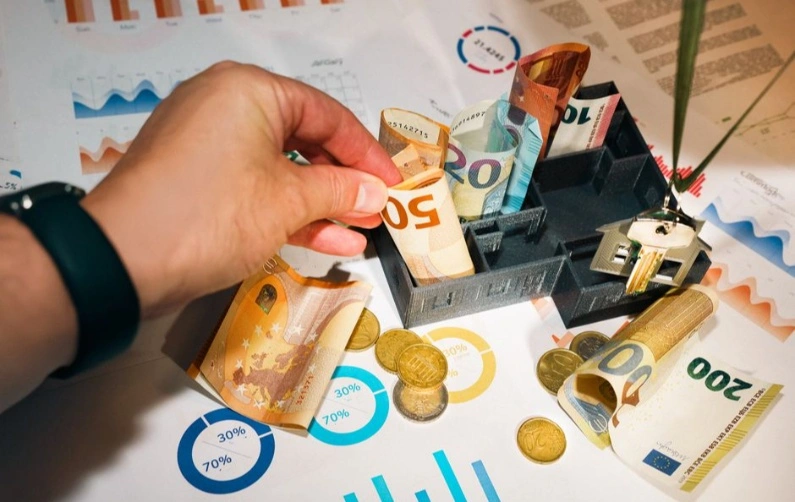
The spring budget's primary initiative is a temporary increase in the renovation tax deduction, amounting to 4.3 billion SEK. This measure aims to stimulate both the construction industry and private consumption, with the government hoping that it will provide an economic uplift, one home renovation at a time. Nonetheless, there are doubts regarding its effectiveness, especially as many households are hesitant to spend on renovations after enduring years of inflation, rising food prices, and escalating interest rates.
The government highlights its recent tax reductions on labor, noting that a family with a police officer and a nurse has seen an increase of 23,000 SEK in disposable income compared to previous years. With inflation rates declining, it is crucial for the government to ensure that working individuals retain more of their earnings, allowing them the freedom to choose how to allocate their finances.
Despite claims of having robust public finances, there is a growing concern regarding the level of debt among Swedish citizens, which is among the highest in the European Union. This raises questions about the sustainability of the current economic model.
The government's fiscal strategy is characterized by a tendency to provide assistance on one hand while imposing costs on the other. For instance, the electricity tax has increased by 12% over the past two years, contrary to prior commitments to reduce it, resulting in an additional financial burden of four billion SEK for consumers. Additionally, the existing malus tax system imposes heavy penalties on diesel and petrol vehicles, and businesses continue to advocate for lower employer contributions and corporate tax rates to enhance their competitiveness.
As the government prepares to present the 2026 budget in September, there is an opportunity to shift focus from temporary measures and subsidies to more long-lasting reforms. Given the global economic volatility, it is essential for Sweden--being a small, open economy--to maintain stability and adaptability in its domestic policies.
Section: Fashion

Section: Health
Section: Politics

Section: Politics
Section: Business
Section: Business

Section: Arts

Section: Business

Section: News
Section: Business
Both private Health Insurance in Germany and public insurance, is often complicated to navigate, not to mention expensive. As an expat, you are required to navigate this landscape within weeks of arriving, so check our FAQ on PKV. For our guide on resources and access to agents who can give you a competitive quote, try our PKV Calculator.
Germany is famous for its medical expertise and extensive number of hospitals and clinics. See this comprehensive directory of hospitals and clinics across the country, complete with links to their websites, addresses, contact info, and specializations/services.
Didn't manage to get a ticket for Linkin Park? Or still not enough after the concert? Join us at CRASH on June 12th for our "IN THE END" Linkin Park Special + CORE NIGHT.All night long, we'll be playing Linkin Park's music, along with Nu Metal, Metalcore, and Alternative Rock from bands such as Limp...



No comments yet. Be the first to comment!