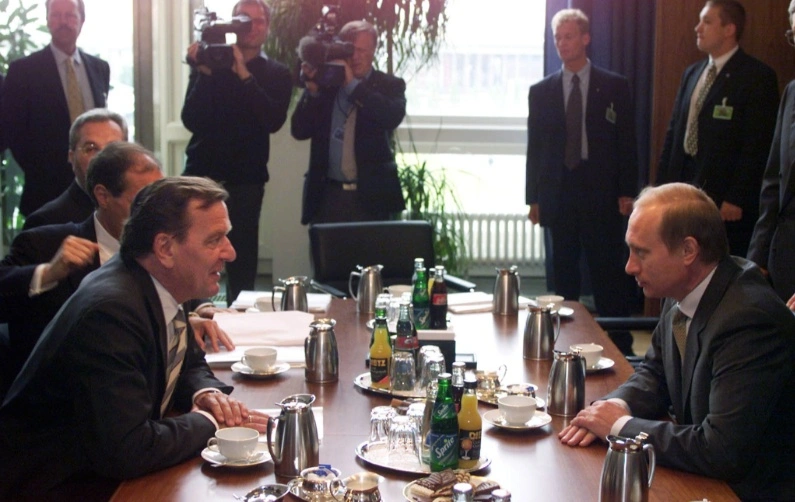
Former German Chancellor Schröder criticised for attending Putin's birthday
Section: News
Serbia's new European Minister, Nemanja Starovic, has expressed a strong desire for the country to join the Schengen Area soon. In a recent interview, he highlighted that Serbia is the only region in Europe where migrants and refugees from the Schengen zone, such as those from Greece and Bulgaria, transit back into the area, specifically to countries like Hungary and Austria. He asserted that Serbia's integration into the Schengen zone would significantly enhance European security.
Starovic emphasized the need for Serbia's preparations for EU accession and Schengen integration to proceed concurrently. He noted that these processes should run parallel as they are not formally dependent on each other, citing examples of European nations that are part of the Schengen Area without being EU members.
During his visit to Vienna, he expressed gratitude to Austria for its strong support of EU expansion to include Western Balkan nations. Responding to Austria's proposal for 'stepwise integration,' Starovic stated that while discussions on this approach are welcome, it must not be seen as a substitute for full EU membership, stressing its potential economic benefits.
The Serbian government is resolute in its commitment to EU membership, which it ranks as its highest foreign policy priority. Starovic conveyed confidence that joining the EU aligns with the national interests of Serbia.
When discussing Serbia's ties with Russia, particularly following President Aleksandar Vucic's recent visit to Moscow for the Victory Parade on May 9, Starovic described the visit as a reflection of Serbia's cultural memory. He reiterated Serbia's firm stance against the Russian invasion of Ukraine, emphasizing the country's commitment to supporting Ukraine, having provided more aid than all other Western Balkan nations combined.
Starovic refrained from speculating on a potential EU accession date, indicating that Serbia aims to complete the necessary reforms to adopt the European legal framework by the end of 2026. He acknowledged the uncertainty surrounding the timeline for becoming an EU member, as it is contingent on various factors, including decisions and reforms within the EU itself. He highlighted the importance of normalizing relations with Kosovo, which declared independence from Serbia in 2008 and is not recognized by Belgrade or five EU member states. Starovic stressed the necessity of achieving this normalization, not only as a prerequisite for EU membership but also for ensuring a stable political environment in Serbia.
He expressed hope that the new EU special envoy for the dialogue between Belgrade and Pristina, Peter Sørensen, could reinvigorate discussions, noting that while some progress has been made in the past three years, practical outcomes have been lacking due to unilateral actions from Pristina that have been condemned by the EU.
Serbia is preparing to advance its EU accession negotiations by the end of July, aiming to open Cluster 3, which focuses on competitiveness and integrated growth. Starovic mentioned that the country has been waiting for this opportunity based on a recommendation from the EU Commission for over three and a half years. He addressed the recent critical report from the EU Parliament, which pointed out significant deficiencies in Serbia regarding the rule of law, media freedom, and electoral reform, assuring that three media laws and a voter registry law are set to be passed in June. Serbia is also working towards appointing members to the regulatory authority for electronic media.
Starovic expressed the hope that Serbia's reforms would gain recognition and emphasized the importance of not being overlooked in the EU enlargement process, especially as other nations like Ukraine may also seek to open their negotiation clusters. He also commented on the ongoing student protests in Serbia following a tragic accident in Novi Sad that resulted in 16 fatalities, stating that the government has met the demonstrators' demands while maintaining that some of the protest actions, such as traffic blockades, are illegal and not in accordance with legal protocols. He assured that the police are focused on maintaining security without resorting to violence.
Section: News

Section: Science
Section: Business

Section: Business
Section: Science
Section: News
Section: Politics
Section: News

Section: Fashion
Section: Arts
Both private Health Insurance in Germany and public insurance, is often complicated to navigate, not to mention expensive. As an expat, you are required to navigate this landscape within weeks of arriving, so check our FAQ on PKV. For our guide on resources and access to agents who can give you a competitive quote, try our PKV Calculator.
Germany is famous for its medical expertise and extensive number of hospitals and clinics. See this comprehensive directory of hospitals and clinics across the country, complete with links to their websites, addresses, contact info, and specializations/services.
Didn't manage to get a ticket for Linkin Park? Or still not enough after the concert? Join us at CRASH on June 12th for our "IN THE END" Linkin Park Special + CORE NIGHT.All night long, we'll be playing Linkin Park's music, along with Nu Metal, Metalcore, and Alternative Rock from bands such as Limp...



No comments yet. Be the first to comment!