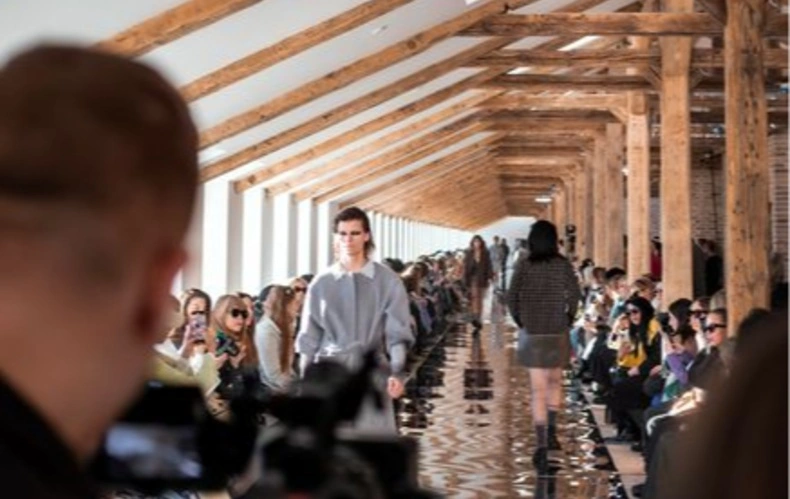
Why Marie Antoinette Showed Up All Over Fashion Week This Year
Section: Fashion
The Austrian Medical Association (ÖÄK) has recently updated its guidelines regarding the diagnosis, imaging, laboratory analysis, and therapeutic planning for non-specific lower back pain. This condition represents a broad spectrum of multifactorial syndromes affecting the entire spine, sharing several common characteristics.
Non-specific lower back pain is categorized primarily as a functional disorder, usually reversible, that involves structures rich in nociceptive innervation, such as joint capsules, myofascial triggers, and insertion points. Initially, there are no identifiable structural alterations, making it undetectable through radiological imaging. Over time, chronic pain syndromes may present both structural changes and functional components, leading to discrepancies between nociceptive areas and structural lesions. Notably, laboratory tests do not typically reveal inflammatory markers.
In the early stages, the pain is primarily nociceptive, but as degenerative changes progress, patients may experience neuropathic or mixed pain types. This condition is multifactorial, with the body employing compensatory mechanisms that result in diverse pain patterns not confined to specific spinal nerve pathways. Patients often report pain and functional impairments, yet neurological deficits are generally absent. There is also a tendency for the condition to become chronic in varying degrees.
The ÖÄK guidelines detail conventional interventions for both acute and chronic phases of non-specific lower back pain. In acute cases, recommended treatments include physical therapy, manual medicine, combined physical therapies, and acupuncture for resistant cases. For chronic stages, additional approaches such as body awareness training, resource enhancement (salutogenesis), relaxation and stress management techniques, pleasure training, and problem-oriented individual therapy are suggested.
This new guideline marks an important step towards integrating complementary and alternative medicine (CAM) practices into mainstream medical approaches. The selected complementary methods are presented with the endorsement of the Austrian Association for Holistic Medicine and physician-led complementary medicine organizations. It is noteworthy that various complementary and alternative therapies have demonstrated positive outcomes in treating non-specific lower back pain.
Included in the accompanying PDF document are detailed descriptions and a literature list of scientific and clinical studies related to the following methods:
Section: Fashion

Section: Health
Section: Politics

Section: Politics
Section: Business
Section: Business
Section: Arts

Section: Business

Section: News
Section: Business
Both private Health Insurance in Germany and public insurance, is often complicated to navigate, not to mention expensive. As an expat, you are required to navigate this landscape within weeks of arriving, so check our FAQ on PKV. For our guide on resources and access to agents who can give you a competitive quote, try our PKV Calculator.
Germany is famous for its medical expertise and extensive number of hospitals and clinics. See this comprehensive directory of hospitals and clinics across the country, complete with links to their websites, addresses, contact info, and specializations/services.
Didn't manage to get a ticket for Linkin Park? Or still not enough after the concert? Join us at CRASH on June 12th for our "IN THE END" Linkin Park Special + CORE NIGHT.All night long, we'll be playing Linkin Park's music, along with Nu Metal, Metalcore, and Alternative Rock from bands such as Limp...



No comments yet. Be the first to comment!