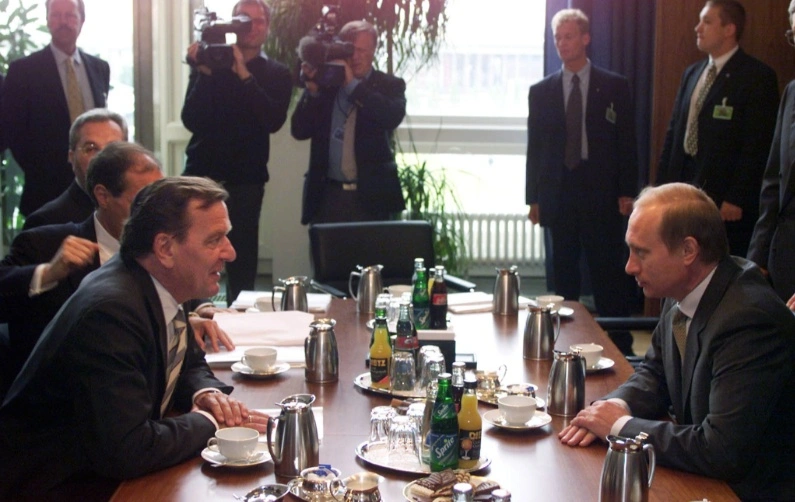
Former German Chancellor Schröder criticised for attending Putin's birthday
Section: News
On May 2, 1990, a significant milestone in South African history was marked as discussions commenced between the white minority government and the leaders of the black majority population, with Nelson Mandela at the forefront. This event symbolized a pivotal step towards dismantling apartheid and fostering a more inclusive political landscape in the country.
These negotiations aimed to address the longstanding issues of racial segregation and inequality that had plagued South Africa for decades. Mandela, who had been imprisoned for 27 years, emerged as a key figure in advocating for the rights of the black majority, emphasizing the need for dialogue and cooperation to achieve a peaceful transition to democracy.
The discussions were not merely a formality; they represented a profound shift in the political landscape of South Africa. The willingness of the white minority government to engage in talks with black leaders was indicative of the mounting pressures both domestically and internationally to reform the oppressive policies of apartheid. The world had been watching closely, and there was a growing consensus that change was essential for the nation's future.
As negotiations progressed, various stakeholders began to rally around the idea of a new South Africa--one where all citizens, regardless of their race, would have equal rights and opportunities. This was a groundbreaking moment, as it laid the groundwork for the eventual dismantling of apartheid laws and the establishment of a democratic government.
Historical context is crucial to understanding the significance of these talks. The apartheid regime, which enforced strict racial segregation, had been met with resistance from various groups, both within South Africa and internationally. The anti-apartheid movement had gained momentum throughout the 1980s, leading to increased sanctions and isolation of the South African government.
By the time the negotiations began in 1990, public sentiment was shifting, and the apartheid system was increasingly viewed as unsustainable. The discussions marked a turning point, not only for South Africa but for the global fight against racial injustice.
In the years that followed, the negotiations would lead to significant political changes, including the release of other political prisoners, the repeal of discriminatory laws, and ultimately, the first multiracial elections in 1994, which saw Nelson Mandela become the country's first black president.
The events of May 2, 1990, remain a powerful reminder of the importance of dialogue and reconciliation in the pursuit of justice and equality. They stand as a testament to the resilience of those who fought for a better future and the ongoing journey toward a truly inclusive society.
Section: News

Section: Science

Section: Business

Section: Business

Section: Science

Section: News
Section: Politics
Section: News

Section: Fashion

Section: Arts
Both private Health Insurance in Germany and public insurance, is often complicated to navigate, not to mention expensive. As an expat, you are required to navigate this landscape within weeks of arriving, so check our FAQ on PKV. For our guide on resources and access to agents who can give you a competitive quote, try our PKV Calculator.
Germany is famous for its medical expertise and extensive number of hospitals and clinics. See this comprehensive directory of hospitals and clinics across the country, complete with links to their websites, addresses, contact info, and specializations/services.
Didn't manage to get a ticket for Linkin Park? Or still not enough after the concert? Join us at CRASH on June 12th for our "IN THE END" Linkin Park Special + CORE NIGHT.All night long, we'll be playing Linkin Park's music, along with Nu Metal, Metalcore, and Alternative Rock from bands such as Limp...



No comments yet. Be the first to comment!