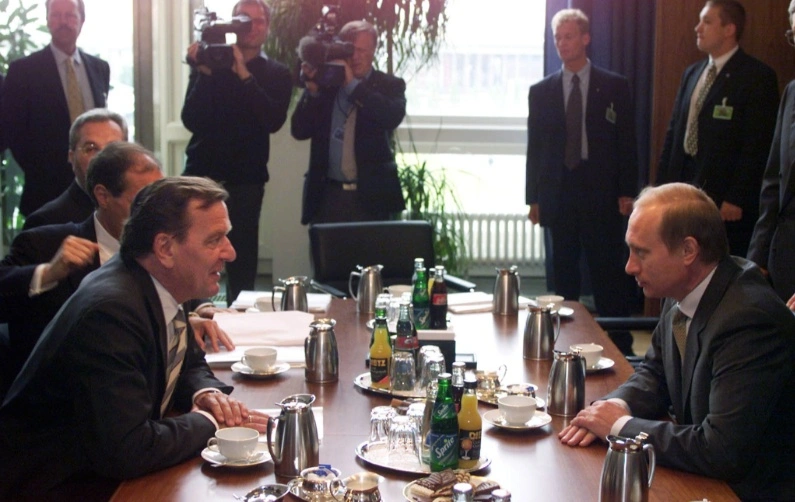
Former German Chancellor Schröder criticised for attending Putin's birthday
Section: News
The recent parliamentary elections in Kosovo have resulted in a clear victory for incumbent Prime Minister Albin Kurti and his Vetëvendosje party, signaling a potential new phase of political stability and renewed momentum toward European integration. This election, the second within a single year, followed a period of governmental stalemate after the previous vote failed to yield a sustainable coalition.
The electorate's decisive support for Vetëvendosje underscores a collective desire for a stable administration capable of advancing Kosovo's domestic and international objectives. The successful outcome for Kurti's party is widely seen as a mandate to break the cycle of political deadlock and to establish a government that can effectively lead the country forward.
Political analysts note that the election outcome reflects the public's aspiration for a more consistent and transparent governance model. The results indicate a call from the Kosovo population for concrete steps toward institutional reform, economic growth, and the strengthening of democratic processes. The formation of a new government is expected to be a critical opportunity to address persistent challenges, including economic development, employment, and public sector modernization.
From a regional perspective, the outcome of Kosovo's elections holds significant implications. The Western Balkans have experienced ongoing political and economic fluctuations, and Kosovo's ability to form a stable government is viewed as a positive sign for the region's overall security and cooperation. The international community, particularly the European Union, has closely observed the developments, as Kosovo's path toward EU membership remains a central issue in its foreign policy agenda.
Observers emphasize the importance of revitalizing the EU-facilitated dialogue between Pristina and Belgrade, which has stalled in recent years. A stable and forward-looking government in Kosovo is considered essential for advancing constructive engagement in this dialogue, which aims to resolve longstanding disputes and foster normalization of relations with Serbia. Success in these negotiations is viewed as integral to long-term peace and prosperity in the region.
Additionally, the European integration process for the Western Balkans has been characterized by delays and uncertainty. The result of the Kosovo parliamentary elections is seen as an opportunity for both domestic leaders and EU officials to intensify efforts toward enlargement and to reaffirm the EU's commitment to the region. A clear and credible path to EU accession for Kosovo and other candidate countries is widely regarded as a means to reinforce political stability and encourage economic reforms.
As the new government prepares to take office, the focus will be on implementing policy measures that demonstrate tangible progress toward European standards, including judicial reforms, anti-corruption initiatives, and the protection of minority rights. The expectation is that these steps will not only fulfill domestic ambitions but also align with criteria set by the EU for membership.
In summary, the recent parliamentary elections in Kosovo are being interpreted as a pivotal event with the potential to invigorate political life, strengthen institutions, and accelerate the country's European journey. The international community will be monitoring the next phases closely, particularly the swift formation of a government and the resumption of meaningful dialogue with Serbia. The coming years are expected to be decisive for Kosovo's role in the region and its prospects for EU integration.
Section: News

Section: Science

Section: Business

Section: Business
Section: Science

Section: News
Section: Politics
Section: News

Section: Fashion
Section: Arts
Both private Health Insurance in Germany and public insurance, is often complicated to navigate, not to mention expensive. As an expat, you are required to navigate this landscape within weeks of arriving, so check our FAQ on PKV. For our guide on resources and access to agents who can give you a competitive quote, try our PKV Calculator.
Germany is famous for its medical expertise and extensive number of hospitals and clinics. See this comprehensive directory of hospitals and clinics across the country, complete with links to their websites, addresses, contact info, and specializations/services.
Didn't manage to get a ticket for Linkin Park? Or still not enough after the concert? Join us at CRASH on June 12th for our "IN THE END" Linkin Park Special + CORE NIGHT.All night long, we'll be playing Linkin Park's music, along with Nu Metal, Metalcore, and Alternative Rock from bands such as Limp...



No comments yet. Be the first to comment!