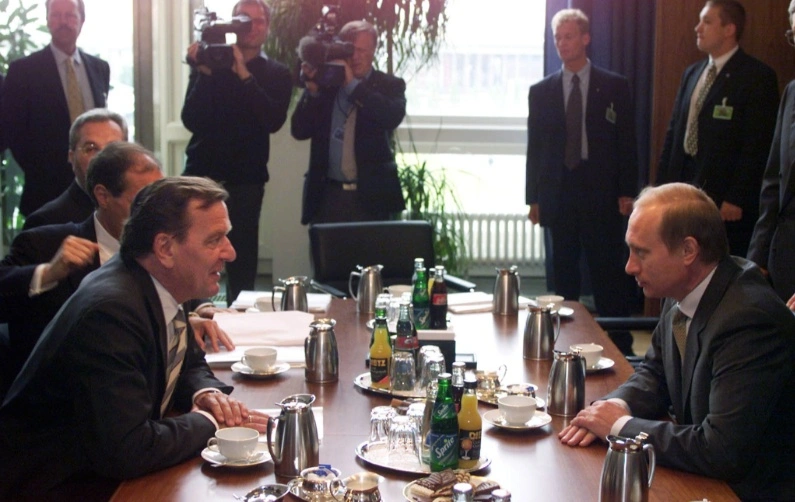
Former German Chancellor Schröder criticised for attending Putin's birthday
Section: News
Global stock markets have recently achieved new record levels, with notable surges in the United States, Japan, and South Korea. Despite ongoing geopolitical uncertainties, particularly in the Middle East and disruptions to critical shipping routes such as the Strait of Hormuz, major indices have continued to climb. Elevated oil prices remain a concern, yet equity markets have shown resilience, driven largely by the performance of technology companies linked to artificial intelligence (AI).
Analysts attribute much of this upward momentum to robust growth in technology sectors, particularly those engaged in AI and semiconductor production. American firms have played a leading role, contributing significantly to the strong returns observed across global markets. Investors, including pension funds and private individuals, have benefited from these gains through diversified holdings in both mutual funds and direct equity investments.
In Sweden, individuals have gained exposure to the ongoing market rally primarily through global investment funds and pension portfolios. While only a small proportion of Swedish mutual fund assets are allocated exclusively to North America, a substantial share of global funds--often over half--are invested in American equities. This trend indicates a considerable indirect reliance on the performance of U.S. companies among Swedish savers.
Within the Swedish pension system, many participants have their assets invested in state-managed funds that feature a majority allocation to North American stocks. For those under the age of 50, investment strategies are typically equity-focused, with risk gradually reduced as retirement approaches. Over the past year, these equity funds have delivered returns exceeding 33%, while global funds have averaged over 16% growth during the same period.
Japan and South Korea have also seen significant market gains, with South Korea's leading technology firms such as Samsung and SK Hynix driving notable increases. Although Swedish investors generally allocate smaller portions of their portfolios to these regions, they still participate in the growth through global funds. The demand for exchange-traded funds (ETFs) targeting specific markets like South Korea has grown among private investors seeking further exposure to high-performing technology stocks.
Leading online banks have reported increased interest in direct investments in major U.S. technology companies, including those specializing in AI and related fields. This trend is seen as a response to the strong performance of technology-heavy indices and the desire among investors to capitalize on emerging opportunities in the sector.
However, the rapid ascent of these markets has also heightened the potential for volatility. Recent trading sessions have seen significant fluctuations, particularly in the AI sector. For example, the technology-focused Nasdaq index in the U.S. and the South Korean stock market both experienced notable declines exceeding 4% and 5%, respectively, following periods of heavy selling pressure.
Market observers caution that the high concentration of investments in AI-related companies may lead to increased risk of corrections if valuations come under scrutiny. Rather than signaling the formation of a speculative bubble, current market sensitivity is attributed to elevated investor expectations, which could trigger periods of heightened volatility if performance falls short of forecasts.
Stock Market Performance Over the Past YearThese figures highlight the broad-based nature of recent market gains, with technology-centric markets leading the way. However, the disparities between regions underscore the importance of diversification and awareness of geographic risk exposures within investment portfolios.
Section: News

Section: Science

Section: Business

Section: Business

Section: Science

Section: News

Section: Politics

Section: News

Section: Fashion

Section: Arts
Both private Health Insurance in Germany and public insurance, is often complicated to navigate, not to mention expensive. As an expat, you are required to navigate this landscape within weeks of arriving, so check our FAQ on PKV. For our guide on resources and access to agents who can give you a competitive quote, try our PKV Calculator.
Germany is famous for its medical expertise and extensive number of hospitals and clinics. See this comprehensive directory of hospitals and clinics across the country, complete with links to their websites, addresses, contact info, and specializations/services.
Didn't manage to get a ticket for Linkin Park? Or still not enough after the concert? Join us at CRASH on June 12th for our "IN THE END" Linkin Park Special + CORE NIGHT.All night long, we'll be playing Linkin Park's music, along with Nu Metal, Metalcore, and Alternative Rock from bands such as Limp...



No comments yet. Be the first to comment!