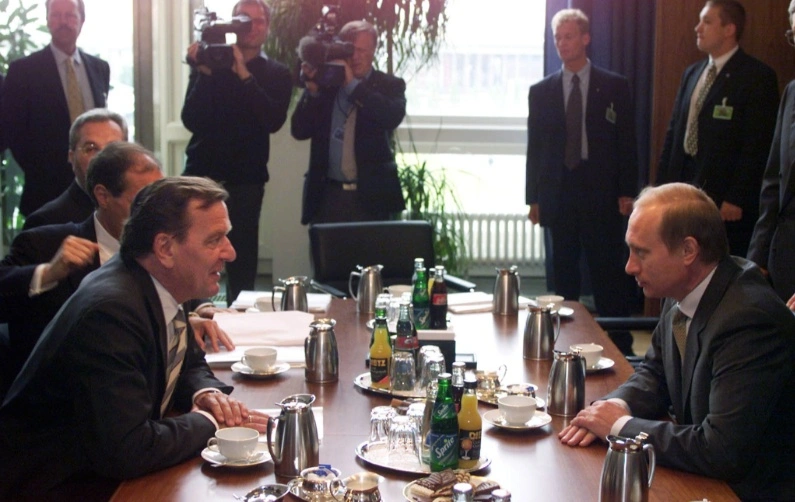
Former German Chancellor Schröder criticised for attending Putin's birthday
Section: News
The European Commission has imposed a financial penalty of EUR120 million on the social media platform X, formerly known as Twitter, for alleged non-compliance with the Digital Services Act (DSA). According to official sources, the Commission cited violations of key provisions designed to combat misinformation and ensure transparency in online platforms operating within the European Union.
The penalty marks a significant enforcement action under the DSA, a regulatory framework that aims to hold large digital platforms accountable for moderating illegal content and protecting users' rights. The Commission stated that X failed to adequately address requirements for content moderation and the removal of harmful information, as stipulated by the legislation.
Political responses in Austria have been sharply divided. Some critics within the Austrian political sphere have characterized the penalty as an example of Brussels' increasingly assertive approach to regulating online discourse. They argue that such measures could set a precedent for further actions against other platforms or independent news outlets, potentially impacting the diversity of opinions available online.
Supporters of the DSA, however, maintain that the law is a necessary tool for safeguarding the public from disinformation and ensuring that digital spaces adhere to European standards of safety, transparency, and accountability. They point out that the DSA requires strict oversight of digital platforms with significant reach, especially those that have historically struggled to manage the spread of misinformation.
Within Austria, some political parties have expressed concerns regarding the national government's support for the European directive. These parties assert that the government's collaboration with the EU could result in stricter regulations at the domestic level, potentially influencing the freedom of expression within the country. Detractors of the penalty have raised questions about the balance between combating harmful content and maintaining fundamental rights, such as the freedom of speech and access to diverse viewpoints.
The European Commission has defended its decision, emphasizing that the DSA was implemented following extensive consultation with stakeholders and is designed to protect users from illegal and harmful content while respecting fundamental rights. The Commission also noted that failure to comply with the DSA could result in financial penalties or other enforcement actions for any digital service provider operating within the EU's jurisdiction.
Legal experts note that this case may have broad implications for the future of digital regulation in Europe. The enforcement action could serve as a warning to other large platforms to prioritize compliance with the DSA's requirements or face similar consequences. Industry analysts predict that the case will encourage further debate over the limits of content moderation, the role of government oversight, and the protection of digital freedoms in the European context.
As the situation develops, both European and national institutions are expected to monitor the impact of the penalty on X and on the broader digital ecosystem. The outcome may influence ongoing discussions about the appropriate balance between regulatory intervention and freedom of expression in the rapidly evolving online environment.
Section: News

Section: Science

Section: Business

Section: Business

Section: Science
Section: News
Section: Politics
Section: News

Section: Fashion

Section: Arts
Both private Health Insurance in Germany and public insurance, is often complicated to navigate, not to mention expensive. As an expat, you are required to navigate this landscape within weeks of arriving, so check our FAQ on PKV. For our guide on resources and access to agents who can give you a competitive quote, try our PKV Calculator.
Germany is famous for its medical expertise and extensive number of hospitals and clinics. See this comprehensive directory of hospitals and clinics across the country, complete with links to their websites, addresses, contact info, and specializations/services.
Didn't manage to get a ticket for Linkin Park? Or still not enough after the concert? Join us at CRASH on June 12th for our "IN THE END" Linkin Park Special + CORE NIGHT.All night long, we'll be playing Linkin Park's music, along with Nu Metal, Metalcore, and Alternative Rock from bands such as Limp...



No comments yet. Be the first to comment!