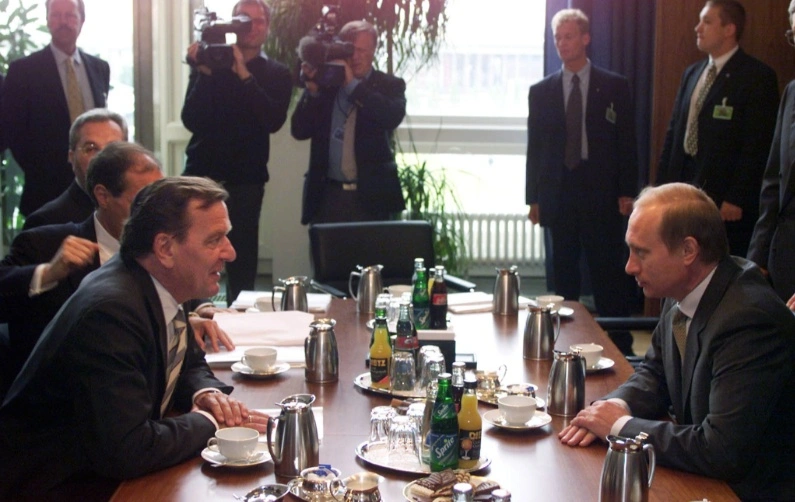
Former German Chancellor Schröder criticised for attending Putin's birthday
Section: News
The European Union Agency for Asylum (EUAA) has released a new assessment indicating that certain regions in Syria, particularly the capital Damascus, may now be considered safe for return. This development could influence future asylum and deportation policies across EU member states, according to statements from several government departments.
The EUAA's report, published earlier this week, evaluates the security and humanitarian conditions in different Syrian regions. The agency identifies Damascus as an area where the overall security situation has stabilized, with a significant reduction in indiscriminate violence compared to previous years. As a result, the report suggests that the risk of serious harm for returnees to the capital is now limited, potentially enabling authorities to consider internal relocation within Syria for certain asylum seekers.
Sociopolitical Dynamics and Risk GroupsThe assessment notes that, while the general risk of targeted persecution for opponents of the former regime led by Bashar al-Assad has decreased, specific social and ethnic groups remain vulnerable. Individuals associated with the previous government, including members of the Alawite religious community--historically linked to the Assad family--as well as Christians and Druze, may still face threats. Additionally, those who are at risk due to their sexual orientation continue to be exposed to persecution.
The EUAA highlights that although there have been improvements in the overall security context, the situation in Syria remains volatile. Arbitrary violence persists in some areas, but the intensity is not considered high in most parts of the country. The agency also notes that Palestinian refugees in Syria, who have lost the protection previously afforded by the United Nations, constitute another at-risk group.
Implications for Asylum and Deportation PoliciesEU member states use the EUAA's country guidance as a reference point for national asylum procedures. The recommendations, while not legally binding, are frequently cited in national court decisions and by migration authorities. In Austria, the Federal Office for Immigration and Asylum has already begun incorporating these findings into its decision-making processes.
The Austrian Ministry of the Interior, which recently resumed deportations to Syria, interprets the EUAA assessment as justification for increasing the number of returns. Officials argue that the recognition of improved safety in Damascus supports a stricter and more consistent asylum policy. According to ministry sources, the first deportation to Syria since the collapse of the Assad regime took place in July, followed by two additional removals to Damascus.
Despite these policy shifts, Syrian nationals continue to seek asylum in Austria, with over 3,600 applications submitted in the first ten months of the year. Of these, 952 individuals have been granted protection status, reflecting ongoing concerns about safety and persecution for many Syrians.
Ongoing Volatility and International ResponseWhile the EUAA's analysis points to relative stability in select areas, the broader situation in Syria is still characterized by uncertainty. Sporadic incidents of violence, political instability, and the precarious status of minority groups mean that the humanitarian and security environment remains complex.
European governments are expected to continue monitoring developments in Syria closely and may adjust their policies as the situation evolves. The EUAA's country guidance serves as an important resource for balancing the rights of asylum seekers with national security and migration objectives.
Section: News

Section: Science
Section: Business

Section: Business

Section: Science

Section: News

Section: Politics

Section: News

Section: Fashion
Section: Arts
Both private Health Insurance in Germany and public insurance, is often complicated to navigate, not to mention expensive. As an expat, you are required to navigate this landscape within weeks of arriving, so check our FAQ on PKV. For our guide on resources and access to agents who can give you a competitive quote, try our PKV Calculator.
Germany is famous for its medical expertise and extensive number of hospitals and clinics. See this comprehensive directory of hospitals and clinics across the country, complete with links to their websites, addresses, contact info, and specializations/services.
Didn't manage to get a ticket for Linkin Park? Or still not enough after the concert? Join us at CRASH on June 12th for our "IN THE END" Linkin Park Special + CORE NIGHT.All night long, we'll be playing Linkin Park's music, along with Nu Metal, Metalcore, and Alternative Rock from bands such as Limp...



No comments yet. Be the first to comment!