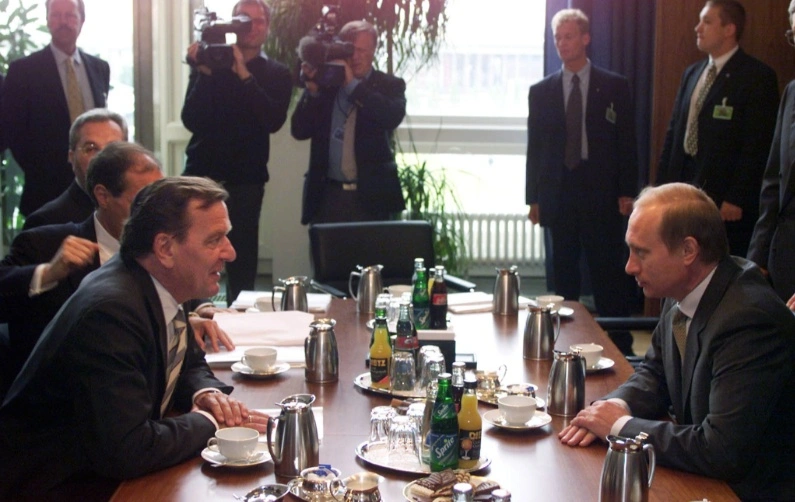
Former German Chancellor Schröder criticised for attending Putin's birthday
Section: News
The ongoing parliamentary investigation into the death of former senior Justice Ministry official Christian Pilnacek has sparked renewed tensions between Austria's major political parties, the Austrian People's Party (ÖVP) and the Freedom Party of Austria (FPÖ). Both parties have traded accusations regarding the conduct and impartiality of the parliamentary inquiry committee and the role of the national ombudsman.
Controversy escalated following a press conference by Christoph Luisser, a member of the Austrian Ombudsman Board appointed by the FPÖ. Luisser raised concerns about what he described as obstacles encountered during the review of police activities linked to Pilnacek's death. Specifically, he cited difficulties in obtaining relevant documents from the Ministry of the Interior and the Ministry of Justice. Luisser emphasized that all government ministries are required by the constitution to cooperate with the ombudsman's investigations.
In the wake of these remarks, the ÖVP expressed suspicion regarding the independence of the ombudsman, suggesting that the FPÖ may be seeking to exert political influence over the office. An ÖVP parliamentary representative questioned whether Luisser was acting in the capacity of an impartial ombudsman or serving FPÖ interests within the inquiry committee. The ÖVP also pointed out that the constitution does not explicitly grant the ombudsman's office the right to demand documents from ministries, underscoring the need for clear boundaries between parliamentary oversight and executive authority.
The FPÖ, in response, condemned the ÖVP's allegations, characterizing them as unacceptable attacks on the integrity of the ombudsman. The party emphasized the importance of independent oversight bodies in ensuring transparency and accountability in government investigations. FPÖ representatives argued that any attempt to undermine or restrict the ombudsman's work would erode public trust in democratic institutions and hinder efforts to clarify the circumstances surrounding Pilnacek's death.
This exchange marks the latest round of disputes between the two parties over the management and scope of the parliamentary inquiry. The Pilnacek case remains a sensitive subject in Austrian politics, as it involves high-level officials and raises questions about the effectiveness of oversight mechanisms and the independence of investigative bodies.
Observers note that the confrontation highlights broader political tensions related to the separation of powers and the role of independent agencies in the Austrian political system. The case has drawn attention to the limits of parliamentary inquiries and the responsibilities of government ministries in providing access to information. Both parties have reiterated their commitments to transparency but continue to disagree on the methods and boundaries of oversight.
The ongoing standoff between the ÖVP and FPÖ is expected to remain a significant issue in Austrian political discourse as the inquiry progresses. The dispute underscores the challenges facing parliamentary commissions in balancing the need for comprehensive investigation with respect for institutional independence and due process.
Section: News

Section: Science

Section: Business

Section: Business

Section: Science

Section: News

Section: Politics

Section: News

Section: Fashion
Section: Arts
Both private Health Insurance in Germany and public insurance, is often complicated to navigate, not to mention expensive. As an expat, you are required to navigate this landscape within weeks of arriving, so check our FAQ on PKV. For our guide on resources and access to agents who can give you a competitive quote, try our PKV Calculator.
Germany is famous for its medical expertise and extensive number of hospitals and clinics. See this comprehensive directory of hospitals and clinics across the country, complete with links to their websites, addresses, contact info, and specializations/services.
Didn't manage to get a ticket for Linkin Park? Or still not enough after the concert? Join us at CRASH on June 12th for our "IN THE END" Linkin Park Special + CORE NIGHT.All night long, we'll be playing Linkin Park's music, along with Nu Metal, Metalcore, and Alternative Rock from bands such as Limp...



No comments yet. Be the first to comment!