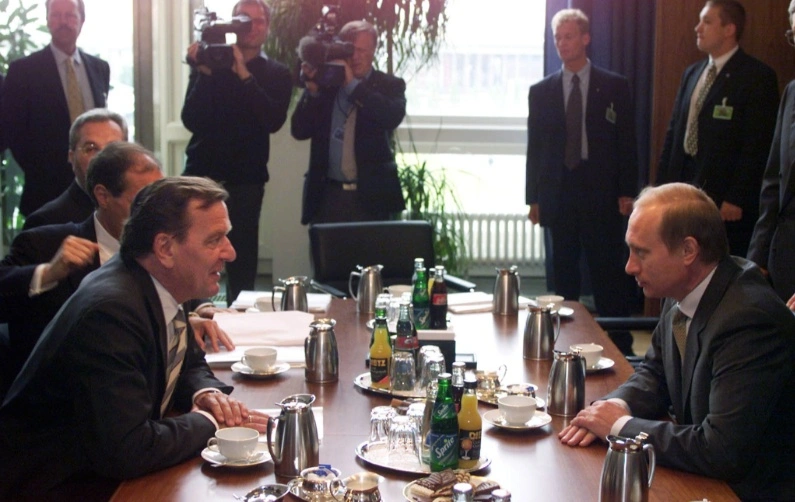
Former German Chancellor Schröder criticised for attending Putin's birthday
Section: News
The Austrian government is facing calls from the opposition to provide detailed information regarding its proposed plans for the early release of incarcerated individuals. Recent announcements from the Ministry of Justice suggest that up to 500 prisoners might be considered for early release in an effort to address overcrowding in correctional facilities. Members of the Austrian People's Party (ÖVP) have raised concerns about the lack of transparency around the proposal, specifically regarding which categories of prisoners would be eligible for consideration, and the basis for estimating the number of potential releases.
According to statements from the opposition, there are significant reservations about the risk that individuals convicted of serious crimes, such as those involved in human trafficking or criminal offenses by asylum seekers, could benefit from early release. The ÖVP insists that a clear distinction must be made regarding the eligibility criteria, emphasizing that individuals convicted of severe offenses should not be prioritized or included in the program to reduce prison populations.
The debate follows reports that the Austrian prison system is experiencing substantial strain, with staff citing high workloads and facilities nearing capacity. The Ministry of Justice has been under increasing pressure to provide solutions that ensure the welfare of correctional staff and maintain public safety. While there is broad agreement that the situation within the justice institutions necessitates attention, political leaders are divided over the appropriate methods to address these challenges.
Opposition representatives argue that any measures taken must not undermine security or send negative signals regarding adherence to law and order. They warn that allowing early release for individuals associated with organized crime or those who have committed significant offenses could be interpreted as leniency, potentially affecting public confidence in the justice system. Additionally, concerns have been raised that such actions could inadvertently incentivize illegal behavior by creating perceptions that the system is unable to enforce sentences fully due to logistical constraints.
In their response, the opposition has called on the Ministry of Justice to publish concrete plans detailing which groups of prisoners would be eligible for early release, the methodology used to determine these numbers, and safeguards to prevent the inclusion of high-risk individuals. They maintain that any policy must ensure the continued safety of the public, offer relief to correctional officers, and uphold the integrity of the legal system.
Justice Minister Anna Sporrer has yet to provide further details on the specifics of the plan, though the ministry has indicated that discussions with relevant stakeholders are ongoing. The ÖVP has expressed an openness to dialogue and collaboration on justice reform, but underlines that measures to address prison overcrowding must not come at the expense of public security or the rule of law.
As the debate continues, political observers note that the issue has become a focal point in the broader discussion about Austria's approach to criminal justice, migration, and internal security. The government faces the challenge of balancing the need for pragmatic solutions to prison overcrowding with the imperative to maintain public trust and deter criminal activity. Further announcements from the Ministry of Justice are anticipated in the coming weeks as the government works to refine its approach and respond to the concerns raised by opposition parties and the public.
Section: News

Section: Science

Section: Business

Section: Business

Section: Science

Section: News
Section: Politics
Section: News

Section: Fashion
Section: Arts
Both private Health Insurance in Germany and public insurance, is often complicated to navigate, not to mention expensive. As an expat, you are required to navigate this landscape within weeks of arriving, so check our FAQ on PKV. For our guide on resources and access to agents who can give you a competitive quote, try our PKV Calculator.
Germany is famous for its medical expertise and extensive number of hospitals and clinics. See this comprehensive directory of hospitals and clinics across the country, complete with links to their websites, addresses, contact info, and specializations/services.
Didn't manage to get a ticket for Linkin Park? Or still not enough after the concert? Join us at CRASH on June 12th for our "IN THE END" Linkin Park Special + CORE NIGHT.All night long, we'll be playing Linkin Park's music, along with Nu Metal, Metalcore, and Alternative Rock from bands such as Limp...



No comments yet. Be the first to comment!