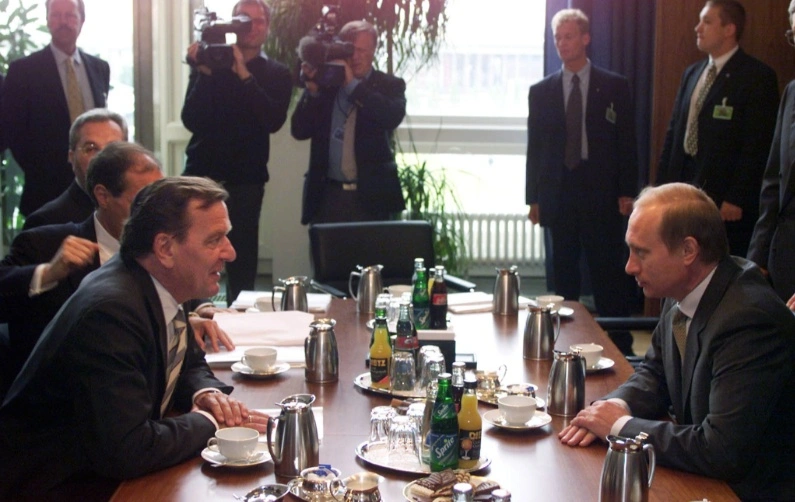
Former German Chancellor Schröder criticised for attending Putin's birthday
Section: News
The ongoing discussion regarding the potential consolidation of Austria's federal states has generated significant debate among political leaders, with representatives from Lower Austria underscoring the critical role that regional governments play in ensuring decisions remain close to citizens.
In response to recent suggestions from government officials advocating for the merger of Austria's nine federal states, members of the Lower Austrian People's Party have reiterated their commitment to maintaining the country's federal structure. They argue that centralizing authority would not lead to greater efficiency but could undermine local representation and complicate decision-making processes.
Critics of state consolidation contend that Austria's unique identity as a federal republic is rooted in its diversity, with each state possessing its own history and distinct character. According to proponents of the current system, any move to reduce the number of states would risk eroding these regional identities and weaken the bond between citizens and their elected officials. They further argue that regional governments are best positioned to address local needs, craft tailored policies, and respond effectively to the concerns of their communities.
Advocates for the preservation of Austria's federal system highlight the importance of robust state and municipal structures. They maintain that political decisions should be made as close to the public as possible, allowing for more responsive governance. This decentralized approach, they claim, encourages civic engagement and ensures that policies reflect the diverse realities of Austria's population.
Supporters of keeping the existing federal arrangement also assert that proposals to merge the states overlook the foundational role that these entities play in the country's political and social framework. They caution that dismantling the current structure could have unintended consequences, such as slowing down decision-making and distancing government from the people it serves. In economic terms, opponents of state consolidation argue that such measures would not yield additional value creation or stimulate economic growth. Instead, they emphasize the need for targeted reforms at the federal level to promote deregulation, job creation, and prosperity across all regions.
Meanwhile, those calling for state mergers often cite potential administrative cost savings and enhanced efficiency as key benefits. However, these arguments are met with skepticism from regional leaders, who point out that the complexity of Austria's governance system is a reflection of its commitment to democracy and regional autonomy.
The debate over the future of Austria's federal states continues amid broader discussions on structural reform and modernization within the country's political system. While there is recognition that improvements are necessary to address challenges facing the nation, many policymakers stress that any reforms must safeguard local representation and uphold the principles of federalism that have long characterized Austria's governance.
As dialogue persists, the balance between efficiency and regional autonomy remains at the forefront of the conversation. The outcome of these discussions will be closely watched by citizens and political observers alike, as they hold significant implications for the future direction of Austria's political landscape.
Section: News

Section: Science

Section: Business

Section: Business
Section: Science

Section: News
Section: Politics
Section: News

Section: Fashion
Section: Arts
Both private Health Insurance in Germany and public insurance, is often complicated to navigate, not to mention expensive. As an expat, you are required to navigate this landscape within weeks of arriving, so check our FAQ on PKV. For our guide on resources and access to agents who can give you a competitive quote, try our PKV Calculator.
Germany is famous for its medical expertise and extensive number of hospitals and clinics. See this comprehensive directory of hospitals and clinics across the country, complete with links to their websites, addresses, contact info, and specializations/services.
Didn't manage to get a ticket for Linkin Park? Or still not enough after the concert? Join us at CRASH on June 12th for our "IN THE END" Linkin Park Special + CORE NIGHT.All night long, we'll be playing Linkin Park's music, along with Nu Metal, Metalcore, and Alternative Rock from bands such as Limp...



No comments yet. Be the first to comment!