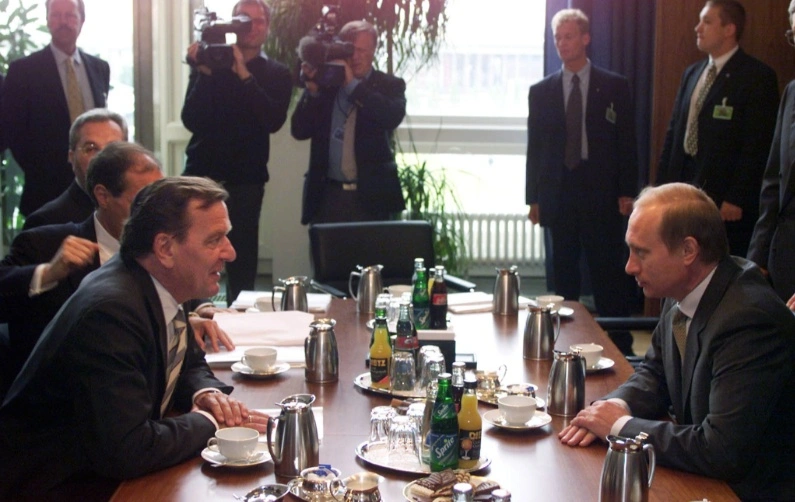
Former German Chancellor Schröder criticised for attending Putin's birthday
Section: News
Austria is expected to see significant growth in its public pension spending, with federal contributions to the statutory pension scheme projected to surpass four percent of the country's gross domestic product (GDP) by 2030, according to the latest medium-term assessment released by the Federal Pension Commission.
The commission's report highlights a substantial increase in state expenditure on pensions over the coming years. In 2018, federal subsidies to the pension system amounted to EUR9.4 billion, representing 2.45 percent of GDP. By 2024, this figure had already climbed to 3.45 percent of GDP. Projections indicate that by 2030, these subsidies will rise to EUR25.2 billion, equivalent to approximately 4.23 percent of GDP.
The rising cost is attributed to a growing number of pension recipients. By 2030, the number of individuals receiving pension benefits is expected to increase by roughly 120,000 compared to current figures. The proportion of federal funding in relation to total pension insurance expenditure will also grow, reaching over 30 percent by 2030. This marks a significant rise from 21.8 percent in 2018 and 26.9 percent in 2024.
In addition to the surge in pensioners, the number of individuals with mandatory pension insurance is forecast to increase at a similar rate. Over the projected period, the average annual growth of insured individuals will be 0.96 percent, closely mirroring the 0.97 percent growth rate in the number of pensioners. This trend is partially influenced by the gradual increase in the statutory retirement age for women, which has been implemented in recent years.
The report also examines the ratio of pensioners to insured individuals, known as the pensioner quota. This measure is expected to remain stable at 1.71 pensioners per 1,000 insured individuals throughout the projection period. However, the commission cautions that the development of average contribution bases and average pension payments continues to present financial challenges. Historically, average pension payments have increased at a rate exceeding that of the contribution base by more than one percentage point. In the current projection, this gap is anticipated to narrow slightly, with pensions rising 0.7 percentage points faster than the contribution base on average.
Despite efforts to mitigate the financial strain through policy adjustments and demographic shifts, the commission underscores that Austria's pension system will require increasing financial support from federal sources in the medium term. Policymakers are expected to monitor these trends closely as they consider potential reforms to ensure the long-term sustainability of public pensions.
Section: News

Section: Science
Section: Business

Section: Business
Section: Science
Section: News
Section: Politics
Section: News

Section: Fashion
Section: Arts
Both private Health Insurance in Germany and public insurance, is often complicated to navigate, not to mention expensive. As an expat, you are required to navigate this landscape within weeks of arriving, so check our FAQ on PKV. For our guide on resources and access to agents who can give you a competitive quote, try our PKV Calculator.
Germany is famous for its medical expertise and extensive number of hospitals and clinics. See this comprehensive directory of hospitals and clinics across the country, complete with links to their websites, addresses, contact info, and specializations/services.
Didn't manage to get a ticket for Linkin Park? Or still not enough after the concert? Join us at CRASH on June 12th for our "IN THE END" Linkin Park Special + CORE NIGHT.All night long, we'll be playing Linkin Park's music, along with Nu Metal, Metalcore, and Alternative Rock from bands such as Limp...



No comments yet. Be the first to comment!