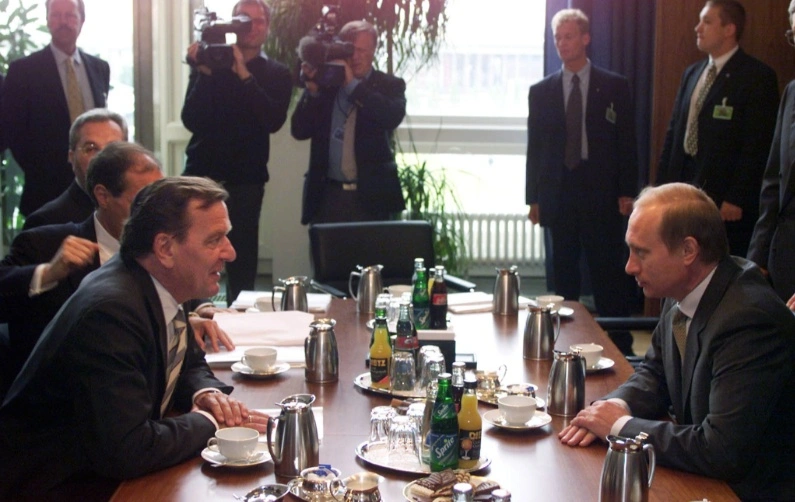
Former German Chancellor Schröder criticised for attending Putin's birthday
Section: News
The Austrian government's draft Budget Accompanying Act 2027-2028 proposes the elimination of the investment-related profit allowance for self-employed professionals. This tax provision has historically enabled freelancers and certain self-employed individuals to benefit from a form of additional annual remuneration, similar to the 13th and 14th salaries received by regular employees, by investing in qualifying securities and adhering to holding periods.
The legislative change, if implemented, would mean the complete removal of this tax incentive. As a result, legal and economic experts anticipate that many affected professionals may seek alternative corporate structures, such as GmbH (limited liability companies) or FlexCo models, to mitigate the financial impact. These structures may offer different tax efficiencies through profit retention, but would not fully compensate for the loss of the allowance.
Critics argue that the removal of the investment-related profit allowance will impose a disproportionate burden on the self-employed sector. Observers highlight that this group plays a significant role in Austria's economic output, tax revenue generation, and job creation. The anticipated tax disadvantage is expected to decrease entrepreneurial activity among self-employed professionals, with broader implications for employment and fiscal contributions.
Economic policy analysts and representatives from the parliamentary opposition have raised concerns that the measure, which has thus far attracted limited public attention, could undermine Austria's attractiveness as a business location. They note that self-employed workers contribute substantially to Austria's gross value added and that any reduction in their economic participation could have ripple effects across multiple sectors.
Further scrutiny has been directed at the government's overall budget strategy. National fiscal oversight bodies, including the EU Commission, Austria's National Bank, and the Fiscal Council, have all indicated that the government's budget targets may not be attainable under current projections. This has increased pressure on policymakers to present a more sustainable and realistic fiscal plan.
Fiscal experts suggest that instead of increasing the tax burden on specific professional groups, the government should prioritize comprehensive structural reforms aimed at curbing excessive public spending. Recommendations include streamlining government functions and focusing resources on core state responsibilities, rather than introducing new financial obligations for citizens and businesses.
Professional associations and economic commentators are closely monitoring the legislative process, as the final version of the Budget Accompanying Act 2027-2028 will determine the future tax landscape for Austria's self-employed. Many are calling for a balanced approach that supports fiscal consolidation without hampering economic growth or diminishing the competitiveness of the country's professional sectors.
The government has yet to respond to these critiques, but the issue is expected to remain a subject of debate as the legislative process continues and as stakeholders advocate for amendments that better address the concerns of Austria's self-employed professionals and business owners.
Section: News

Section: Science

Section: Business

Section: Business
Section: Science

Section: News
Section: Politics
Section: News

Section: Fashion
Section: Arts
Both private Health Insurance in Germany and public insurance, is often complicated to navigate, not to mention expensive. As an expat, you are required to navigate this landscape within weeks of arriving, so check our FAQ on PKV. For our guide on resources and access to agents who can give you a competitive quote, try our PKV Calculator.
Germany is famous for its medical expertise and extensive number of hospitals and clinics. See this comprehensive directory of hospitals and clinics across the country, complete with links to their websites, addresses, contact info, and specializations/services.
Didn't manage to get a ticket for Linkin Park? Or still not enough after the concert? Join us at CRASH on June 12th for our "IN THE END" Linkin Park Special + CORE NIGHT.All night long, we'll be playing Linkin Park's music, along with Nu Metal, Metalcore, and Alternative Rock from bands such as Limp...



No comments yet. Be the first to comment!