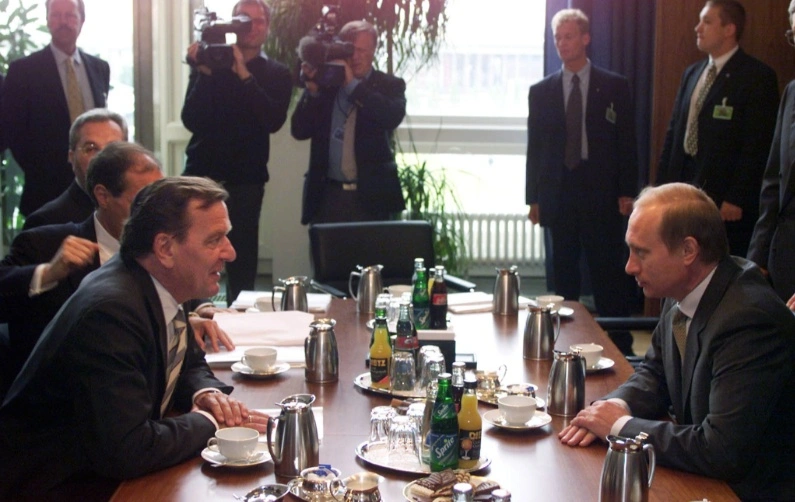
Former German Chancellor Schröder criticised for attending Putin's birthday
Section: News
Recent scrutiny has been directed toward executive compensation within Austria's state-affiliated enterprises, following the release of an official report detailing remuneration practices. Concerns have been raised regarding the significant disparity between the salaries of top managers and the average earnings of regular employees, particularly in companies such as Österreichische Post AG and Verbund AG.
The report highlights that executive board members at Österreichische Post AG receive annual compensation averaging over two million euros, while executives at Verbund AG earn around 1.3 million euros per year. These figures have prompted questions about the proportionality and fairness of such pay scales, especially given the broader context of economic challenges faced by the population, including inflation and increased living costs.
Criticism has centered on the apparent contrast between high executive rewards and the financial constraints experienced by ordinary employees and the public. In recent years, Österreichische Post AG has undergone structural changes, including the closure of post offices and staff reductions, which has further intensified public debate about the distribution of resources within state-associated enterprises.
Calls have emerged for the immediate implementation of a cap on executive salaries within state-influenced companies. Advocates for salary reform argue that managerial compensation should not exceed the remuneration of high-ranking public officials, such as the Federal Chancellor. They contend that funds allocated to executive pay could instead be redirected to enhance services, reduce fees for consumers, and improve the working conditions of frontline employees.
Additionally, the report suggests that the current compensation structures are the result of longstanding governance practices, where political appointments and networks have influenced senior management positions in these organizations. Observers have called for increased transparency and stricter oversight to prevent conflicts of interest and ensure that state resources are managed responsibly.
Stakeholders from various sectors emphasize the importance of aligning executive compensation with broader public interests and economic realities. They argue that responsible management of public enterprises should prioritize service quality, affordability for consumers, and equitable treatment of employees, rather than disproportionately high executive rewards.
The debate over executive pay in Austria's state-affiliated companies is expected to continue, as policymakers and the public seek solutions that balance efficiency, fairness, and the responsible use of public funds. Proposals for legislative action, including enforceable salary limits tied to government pay scales, are under consideration as part of broader efforts to reform governance and promote accountability in the management of state assets.
Section: News

Section: Science

Section: Business

Section: Business

Section: Science

Section: News

Section: Politics

Section: News

Section: Fashion
Section: Arts
Both private Health Insurance in Germany and public insurance, is often complicated to navigate, not to mention expensive. As an expat, you are required to navigate this landscape within weeks of arriving, so check our FAQ on PKV. For our guide on resources and access to agents who can give you a competitive quote, try our PKV Calculator.
Germany is famous for its medical expertise and extensive number of hospitals and clinics. See this comprehensive directory of hospitals and clinics across the country, complete with links to their websites, addresses, contact info, and specializations/services.
Didn't manage to get a ticket for Linkin Park? Or still not enough after the concert? Join us at CRASH on June 12th for our "IN THE END" Linkin Park Special + CORE NIGHT.All night long, we'll be playing Linkin Park's music, along with Nu Metal, Metalcore, and Alternative Rock from bands such as Limp...



No comments yet. Be the first to comment!