
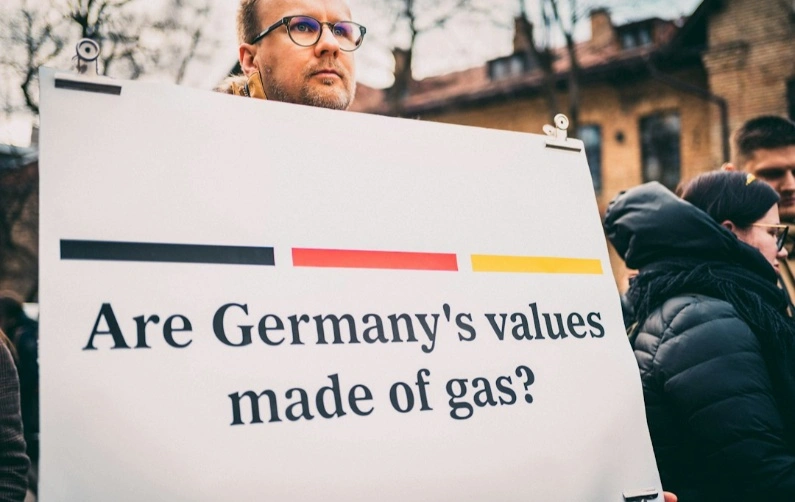
Former German Chancellor Schröder criticised for attending Putin's birthday
Section: News
Advancements in material science are being propelled by cutting-edge computational methods, as researchers leverage artificial intelligence (AI) to accelerate the discovery and development of high-performance alloys. A leading scientist at the Materials Center Leoben (MCL) is at the forefront of this evolution, employing innovative AI models to design and optimize materials for next-generation technologies.
Traditionally, material scientists have relied on quantum mechanical calculations to analyze atomic-scale properties and predict the behavior of complex alloys. These methods, while accurate, often demand significant computational resources, especially when exploring intricate materials such as high-entropy alloys, which combine multiple elements to achieve superior strength and ductility. The increasing complexity presents challenges for existing computational approaches, limiting the speed and scalability of new material discoveries.
Addressing these challenges, the research initiative known as Mad-Tensor introduces a transformative approach by integrating advanced AI tools called tensor networks. Tensor networks have the unique capability to represent vast datasets and model complex atomic interactions with reduced computational overhead, without sacrificing predictive accuracy. This method streamlines the analysis of how atomic defects, such as lattice dislocations and microcracks, influence material properties, thereby enabling rapid screening and optimization of candidate alloys.
The strategic goal of these efforts is to establish practical, computer-aided material design processes that can be readily applied in industrial and scientific settings. By simplifying AI model complexity, Mad-Tensor aims to make high-throughput simulations more accessible, paving the way for the design of innovative alloys with tailored properties suitable for diverse applications, from aerospace engineering to sustainable energy systems.
Researchers at MCL, supported by a significant grant from the European Research Council, are combining expertise in mechanical engineering, computational physics, chemistry, and informatics to advance these objectives. Their work builds on international experience in machine learning and atomistic simulations, previously developed at leading institutions in Switzerland and Russia. Through these collaborative efforts, the team is enhancing the accuracy and efficiency of computational tools to identify novel combinations of metals with enhanced performance characteristics.
The research environment at MCL fosters interdisciplinary collaboration, driving progress in developing not just metals, but also ceramics, composite materials, and functional surfaces. This integrated approach strengthens Austria's position in global material innovation and supports emerging technological sectors that demand superior materials with specific mechanical, electrical, and thermal properties.
As AI-driven methods become increasingly central to material science, the prospects for discovering new alloys with exceptional attributes are expanding. The development of computationally efficient, scalable models will continue to transform how scientists approach the design and testing of advanced materials. These breakthroughs promise to accelerate technological progress and deliver practical benefits across multiple industries, ensuring that material science remains a cornerstone of innovation in the years to come.
Section: News

Section: Science

Section: Business

Section: Business

Section: Science

Section: News

Section: Politics
Section: News

Section: Fashion
Section: Arts
Both private Health Insurance in Germany and public insurance, is often complicated to navigate, not to mention expensive. As an expat, you are required to navigate this landscape within weeks of arriving, so check our FAQ on PKV. For our guide on resources and access to agents who can give you a competitive quote, try our PKV Calculator.
Germany is famous for its medical expertise and extensive number of hospitals and clinics. See this comprehensive directory of hospitals and clinics across the country, complete with links to their websites, addresses, contact info, and specializations/services.
Didn't manage to get a ticket for Linkin Park? Or still not enough after the concert? Join us at CRASH on June 12th for our "IN THE END" Linkin Park Special + CORE NIGHT.All night long, we'll be playing Linkin Park's music, along with Nu Metal, Metalcore, and Alternative Rock from bands such as Limp...



No comments yet. Be the first to comment!