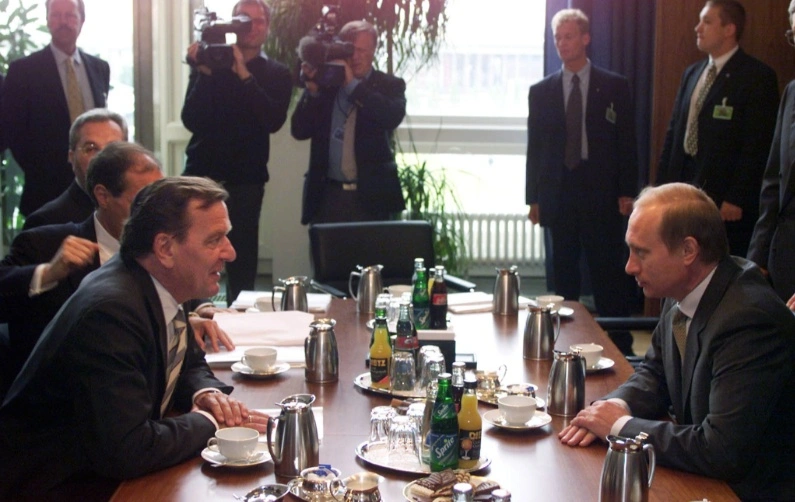
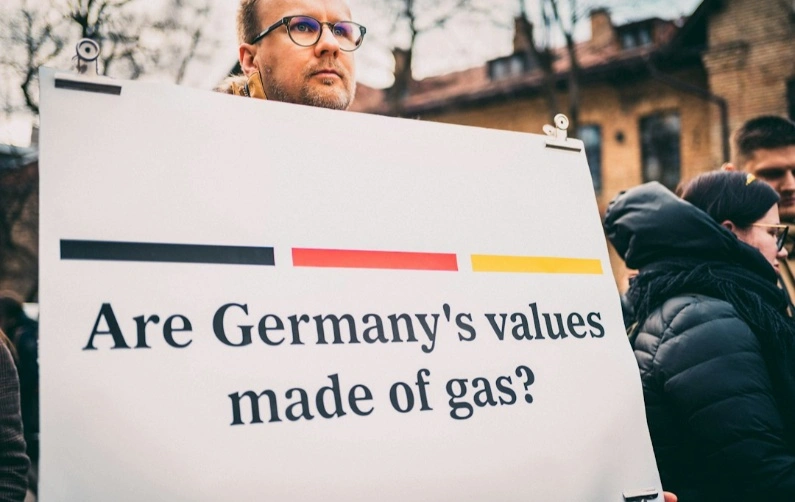
Former German Chancellor Schröder criticised for attending Putin's birthday
Section: News
Fresh hostilities have broken out in the border region between Afghanistan and Pakistan, resulting in multiple civilian and military casualties. According to Afghan officials, recent overnight clashes led to the deaths of four civilians and one soldier, with five additional civilians reported injured. On the Pakistani side, hospital sources confirmed three minor injuries.
The latest violence occurred at the key border crossing linking Chaman in Pakistan with Spin Boldak in southern Afghanistan. Eyewitnesses on the Afghan side indicated that gunfire began late in the evening, around 10:30 pm local time, and persisted for approximately two hours. Reports from Chaman described the sounds of artillery and explosions throughout the area. Afghan provincial authorities stated that both light and heavy artillery were utilized, impacting several residential structures with mortar fire.
Both governments offered conflicting explanations for the renewed conflict, each attributing responsibility for the escalation to the other side. Afghan officials asserted that Pakistani forces initiated attacks in the Spin Boldak district, prompting a defensive response. Conversely, Pakistani representatives claimed that their personnel came under unprovoked fire from Afghan units, necessitating an immediate and resolute counteraction. Despite the exchange of hostilities, provincial sources later confirmed that a cessation of fire was agreed upon by both parties.
Violence in this border region has been recurrent since the Taliban regained control in Afghanistan in August 2021. Pakistan has consistently accused the Afghan authorities of providing sanctuary to armed extremist groups, such as the Tehrik-i-Taliban Pakistan (TTP), who are believed to orchestrate attacks within Pakistani territory. Afghan officials have refuted these accusations, maintaining that they do not support cross-border militancy.
Earlier in October, sustained confrontations in the border area led to significant casualties, with United Nations figures citing over 70 deaths and hundreds injured over a single week. These developments prompted mediated negotiations, involving Qatar and Turkey, which resulted in a temporary ceasefire agreement. However, subsequent discussions failed to yield a durable arrangement, and the border has remained closed since mid-October.
The situation further deteriorated in November, when Afghan authorities accused Pakistan of conducting airstrikes that killed ten individuals, including nine children, in the border vicinity. Islamabad denied these claims. Later, Pakistan's Foreign Ministry cited ongoing terrorist attacks within its borders as evidence that the truce was not being upheld.
Despite the tense security climate, Pakistani officials announced an intention to partially reopen the border for the delivery of humanitarian aid. The United Nations was expected to utilize the Chaman crossing to facilitate relief operations for Afghan communities, although the precise timeline for these shipments remained unclear. Authorities from Pakistan indicated that the most recent clash would not impede ongoing plans for humanitarian assistance.
The Afghanistan-Pakistan border has long been a flashpoint for cross-border violence, with both nations periodically engaging in military exchanges and trading accusations of fostering instability. The lack of a lasting resolution continues to affect civilian populations on both sides, underscoring the urgent need for diplomatic engagement and sustainable security measures.
Section: News

Section: Science
Section: Business

Section: Business

Section: Science
Section: News
Section: Politics
Section: News

Section: Fashion
Section: Arts
Both private Health Insurance in Germany and public insurance, is often complicated to navigate, not to mention expensive. As an expat, you are required to navigate this landscape within weeks of arriving, so check our FAQ on PKV. For our guide on resources and access to agents who can give you a competitive quote, try our PKV Calculator.
Germany is famous for its medical expertise and extensive number of hospitals and clinics. See this comprehensive directory of hospitals and clinics across the country, complete with links to their websites, addresses, contact info, and specializations/services.
Didn't manage to get a ticket for Linkin Park? Or still not enough after the concert? Join us at CRASH on June 12th for our "IN THE END" Linkin Park Special + CORE NIGHT.All night long, we'll be playing Linkin Park's music, along with Nu Metal, Metalcore, and Alternative Rock from bands such as Limp...



No comments yet. Be the first to comment!