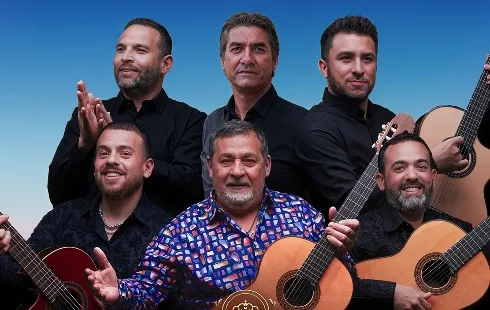
Gipsy Kings: "Music Is a Natural Way of Life"
Section: Arts
Following a deadly incident near the White House, the deployment of National Guard troops in Washington, D.C., has become a focal point of national debate. The attack resulted in the death of a 20-year-old National Guard member, Sarah Beckstrom, while another remains in critical condition. The event has reignited discussions on security, immigration policies, and the role of military personnel in urban environments.
Prominent political figures have linked the suspect, reportedly a Muslim refugee from Afghanistan, to broader issues surrounding the U.S. withdrawal from Afghanistan. This connection has prompted renewed scrutiny of immigration procedures and their perceived impact on national security. In response to the attack, authorities announced the mobilization of an additional 500 National Guard troops to the capital, intensifying the visible security presence.
The effectiveness of increased military deployment in addressing crime rates in Washington has been questioned by various observers. Despite assertions that the city has become safer under heightened security, official crime statistics indicate that violent crime, including homicides, has been on a downward trend for several years. There is limited evidence to suggest a direct correlation between the presence of National Guard troops and a significant reduction in crime.
The deployment has also sparked internal discontent among military personnel. Recent accounts indicate that some service members have expressed dissatisfaction with assignments that diverge from traditional military roles, such as performing routine patrols or managing non-criminal incidents. This sentiment has contributed to broader discussions about the appropriateness and effectiveness of military involvement in civil affairs.
Political discourse surrounding the tragedy has been marked by contentious exchanges between opposing parties. Some conservative leaders have attributed the incident to lapses in immigration policy and leadership, while liberal commentators have raised concerns about the militarization of urban spaces and the potential erosion of civil liberties. Both sides have accused each other of exploiting the tragedy for political gain, further polarizing the public debate.
In the wake of the shooting, questions have emerged regarding the necessity and impact of deploying thousands of uniformed soldiers to the nation's capital. Critics argue that such measures may serve more as political statements than as effective crime prevention strategies. Others maintain that a robust military presence is essential to ensure public safety, particularly in light of recent security challenges.
Authorities continue to investigate the circumstances surrounding the attack. Meanwhile, the incident has intensified the national conversation on balancing security, immigration, and the appropriate use of military resources in civilian settings. The tragedy underscores the complexities involved in formulating effective responses to urban security threats without compromising democratic principles or community trust.
Section: Arts

Section: Fashion

Section: Health Insurance

Section: News

Section: Politics
Section: Business

Section: Health

Section: Arts
Section: Politics

Section: Business
Both private Health Insurance in Germany and public insurance, is often complicated to navigate, not to mention expensive. As an expat, you are required to navigate this landscape within weeks of arriving, so check our FAQ on PKV. For our guide on resources and access to agents who can give you a competitive quote, try our PKV Cost comparison tool.
Germany is famous for its medical expertise and extensive number of hospitals and clinics. See this comprehensive directory of hospitals and clinics across the country, complete with links to their websites, addresses, contact info, and specializations/services.
Didn't manage to get a ticket for Linkin Park? Or still not enough after the concert? Join us at CRASH on June 12th for our "IN THE END" Linkin Park Special + CORE NIGHT.All night long, we'll be playing Linkin Park's music, along with Nu Metal, Metalcore, and Alternative Rock from bands such as Limp...



No comments yet. Be the first to comment!