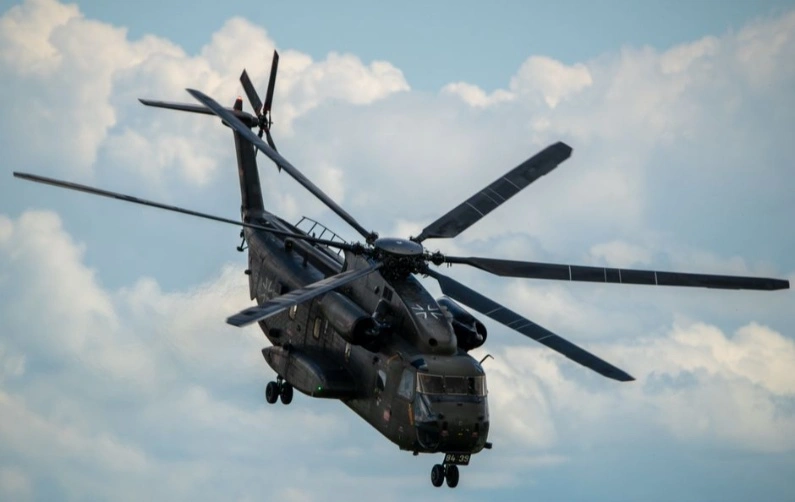
Record Orders in German Industry Driven by Defense Spending
Section: Politics
Svitlana Zalizetskaja, a prominent figure in independent journalism, showcases the operations of her news agency, Ria Syd, which has relocated multiple times in Zaporizjzja due to the ongoing conflict in Ukraine. Since spring 2022, the agency has had to move its office three times, initially due to bombings and then due to safety concerns linked to military targets nearby.
Originally from Melitopol, a city in southeastern Ukraine near the Sea of Azov, Zalizetskaja co-founded Ria Melitopol, which provided news coverage for her local area. Following Russia's full-scale invasion of Ukraine in February 2022, the city fell quickly to Russian forces, prompting Zalizetskaja to flee to Zaporizjzja, the regional capital located approximately 150 kilometers north. However, her parents remained in Melitopol, and it wasn't long before they were confronted by the consequences of the invasion.
Her father was kidnapped, and Zalizetskaja received a threatening phone call urging her to stop reporting on the war, with the implication that her father's release depended on her compliance. Refusing to back down, she continued her work as a journalist, and her father was released after three days.
Now, more than three years later, Zalizetskaja still operates in exile, a situation shared by about 70% of her colleagues. The landscape of independent journalism in Russian-occupied territories has drastically changed, with severe risks facing those who attempt to report the truth. In August 2023, two journalists from Ria Syd were detained and currently remain imprisoned, with one recently receiving a 16-year sentence. The control exerted by occupying forces continues to intensify.
For journalists operating from exile, the challenge of disseminating accurate information about the situation in occupied areas is compounded by increased risks for local informants. Zalizetskaja emphasizes the importance of maintaining personal connections with contacts in Melitopol, relying on friends, family, and acquaintances to gather information.
Utilizing messaging platforms like WhatsApp and Telegram, sources can send images and updates to the newsroom, where they are verified before publication. Current issues of focus include drought conditions, failed harvests, and a critical shortage of drinking water in the region. However, the risks for those providing information are escalating. Sources need to navigate the dangers of surveillance, often using hidden devices, as Russian authorities monitor communications closely.
Despite the dangers, Zalizetskaja insists on the importance of continuing to report on the situation. The team at Ria Syd publishes content via Telegram and YouTube, albeit accessible only through VPNs that require frequent updates. Their audience remains engaged, a testament to the demand for independent news amid increasing censorship.
Reportrar utan gränser (Reporters Without Borders) acknowledges Zalizetskaja's efforts and highlights the diminishing flow of information from occupied regions. The organization reports that many news agencies and journalists have either been forced to shut down or relocate multiple times since the conflict escalated in 2014.
Currently, 26 Ukrainian journalists remain imprisoned in Russia, with several being held for extended periods. Continuous efforts are made to ascertain the whereabouts and well-being of those detained. Journalists in exile maintain connections through larger media networks, sharing experiences and insights about the conditions in occupied areas.
Zalizetskaja observes that Melitopol has undergone significant changes since the invasion. Approximately half of the pre-invasion population has fled, while new residents have moved in, including Russians who relocated to Crimea after 2014. These newcomers have been instrumental in reshaping the local community, often settling in homes previously owned by those who have left.
Documentation of these changes is essential to highlight potential war crimes. Zalizetskaja's parents, who remain in Melitopol, live in a precarious state, struggling to maintain a semblance of normalcy amidst the occupation. While they have basic necessities, their quality of life is severely diminished.
Despite the challenges, conversations with her mother provide a glimmer of hope, especially when her mother shares news updates from international leaders. There's a shared concern about each other's well-being, as both sides navigate the uncertainties of life under conflict.
For Zalizetskaja, remaining in Zaporizjzja, despite the threats of bombardment, feels like a necessary choice. The moral freedom to express oneself without fear of retaliation is paramount, and she remains resolute in her commitment to journalism.
Section: Politics
Section: Business
Section: Business
Section: Arts

Section: Business
Section: News
Section: Business
Section: News
Section: News
Section: Politics
Both private Health Insurance in Germany and public insurance, is often complicated to navigate, not to mention expensive. As an expat, you are required to navigate this landscape within weeks of arriving, so check our FAQ on PKV. For our guide on resources and access to agents who can give you a competitive quote, try our PKV Calculator.
Germany is famous for its medical expertise and extensive number of hospitals and clinics. See this comprehensive directory of hospitals and clinics across the country, complete with links to their websites, addresses, contact info, and specializations/services.
Didn't manage to get a ticket for Linkin Park? Or still not enough after the concert? Join us at CRASH on June 12th for our "IN THE END" Linkin Park Special + CORE NIGHT.All night long, we'll be playing Linkin Park's music, along with Nu Metal, Metalcore, and Alternative Rock from bands such as Limp...



No comments yet. Be the first to comment!