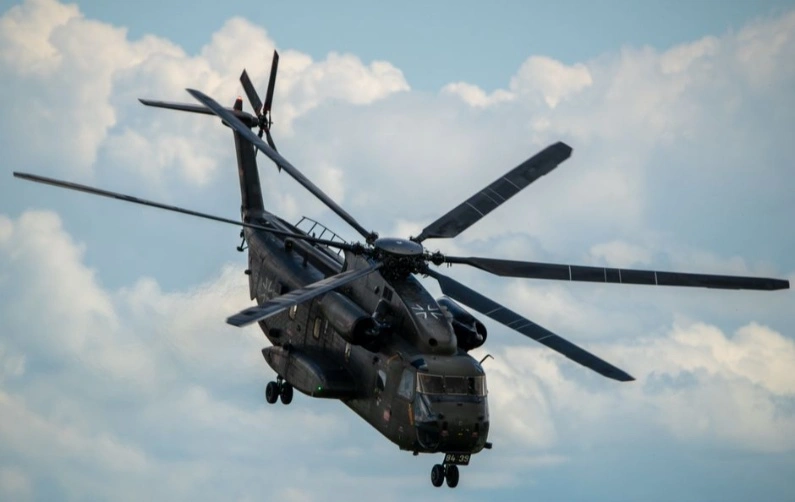
Record Orders in German Industry Driven by Defense Spending
Section: Politics
In a significant shift toward sustainable transportation, the focus on eFuels is gaining momentum across Europe, signaling the end of a purely electric-only approach in the fight against climate change in the transportation sector.
As the climate crisis continues to challenge global efforts, the eFuel Alliance in Austria is advocating for the adoption of synthetic fuels, which they believe can play a crucial role in achieving emission reduction goals. The president of the alliance highlighted that while no single technology can solve the climate crisis, eFuels and other renewable options like HVO (Hydrotreated Vegetable Oil) offer necessary solutions.
Current developments indicate that eFuels are ready for market deployment, being both environmentally friendly and competitively priced. Numerous projects are already in the pipeline with around 300 initiatives geared toward large-scale production.
The acknowledgment of eFuels as essential components in the transition to sustainable mobility has gained traction in political circles, particularly with the introduction of the Zero-Emissions Industry Act in Brussels. This shift may also impact the legislation surrounding combustion engines, as the potential resurgence of highly efficient green combustion engines, fueled by these synthetic alternatives, gains attention.
Companies such as Synhelion are already producing solar fuels derived from concentrated sunlight, while Ineratec is scaling its operations. OMV has announced plans to enter the HVO and SAF (Sustainable Aviation Fuel) production market by 2028, marking just the beginning of a broader industry transformation. Austrian investors and technology developers are at the forefront of this movement, yet the lack of regulatory clarity continues to hinder progress.
Concerns about bureaucratic obstacles remain prevalent. The president of the eFuel Alliance criticized current regulations that complicate investments in hydrogen and renewable energy, arguing that the stringent requirements are impractical for future development. He emphasized that effective policies are essential for fostering innovation in the sector.
Despite these challenges, the EU Commission has recently recognized the significance of eFuels, including CO2 capture, as part of its new climate policies. This acknowledgment aligns with the increasing CO2 pricing on fossil fuels, which could favor the adoption of eFuels.
A comprehensive climate strategy is needed, moving away from a singular focus on electric vehicles. Currently, only 4% of cars in Austria are electric, while the auto industry faces substantial challenges, including job losses. Many manufacturers are reconsidering their strategies and are returning to the development of advanced combustion engines that utilize eFuels as a key component in their decarbonization efforts.
This renewed emphasis on eFuels is also seen as a means to reduce Europe's reliance on China for essential raw materials and technologies related to electric vehicles, which presents a significant risk. The European Economic and Social Committee has called for a unified European strategy on eFuels, since over half of the countries worldwide have the potential to produce these fuels affordably, enhancing energy independence and contributing to climate protection.
For those interested in the latest developments regarding climate protection through fuels, the EKKON Congress on Climate Protection through Fuels will be held on September 25-26, 2025.
Section: Politics
Section: Business
Section: Business

Section: Arts
Section: Business

Section: News
Section: Business
Section: News
Section: News
Section: Politics
Both private Health Insurance in Germany and public insurance, is often complicated to navigate, not to mention expensive. As an expat, you are required to navigate this landscape within weeks of arriving, so check our FAQ on PKV. For our guide on resources and access to agents who can give you a competitive quote, try our PKV Calculator.
Germany is famous for its medical expertise and extensive number of hospitals and clinics. See this comprehensive directory of hospitals and clinics across the country, complete with links to their websites, addresses, contact info, and specializations/services.
Didn't manage to get a ticket for Linkin Park? Or still not enough after the concert? Join us at CRASH on June 12th for our "IN THE END" Linkin Park Special + CORE NIGHT.All night long, we'll be playing Linkin Park's music, along with Nu Metal, Metalcore, and Alternative Rock from bands such as Limp...



No comments yet. Be the first to comment!