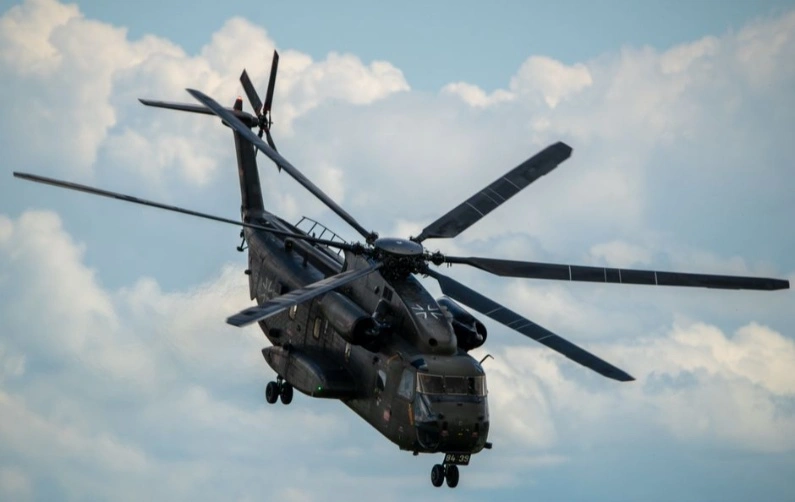
Record Orders in German Industry Driven by Defense Spending
Section: Politics
Thailand and Cambodia have reached an agreement on an immediate ceasefire, aiming to bring an end to weeks of intense border conflict that has caused significant loss of life and displacement. The deal was finalized during a meeting between Thailand's Defense Minister Natthaphon Narkphanit and Cambodia's Defense Minister Tea Seiha, who signed the agreement on Saturday. According to Thai defense officials, the ceasefire has held since its implementation, offering a potential halt to the violence that has persisted for the past 20 days.
The recent hostilities along the roughly 800-kilometer shared border have resulted in at least 101 fatalities and forced over half a million residents from both nations to flee their homes. This marks the second attempt in recent months by both countries to establish a sustainable truce, following a previously brokered ceasefire that ultimately collapsed.
Under the terms of the new agreement, both sides have committed to suspending all military actions, including any use of weaponry, attacks on civilian populations, civilian infrastructure, and military installations. The accord also stipulates that no additional troops will be deployed, and existing military positions will remain unchanged to prevent further escalation. Both governments have acknowledged that reinforcing military presence could exacerbate tensions.
Supervision of the ceasefire will be undertaken by a monitoring team from the Association of Southeast Asian Nations (ASEAN). Direct communication channels are being established between the defense ministries and army leaderships of both countries to facilitate rapid response and de-escalation should any incidents arise.
Diplomatic engagement from other nations has also played a role in this development. China has become actively involved in mediating the situation, with the foreign ministers of Thailand and Cambodia scheduled to meet with their Chinese counterpart in Yunnan province for further discussions on border security and conflict resolution. In contrast, the previous ceasefire attempt saw involvement from the United States and Malaysia, although it did not achieve lasting peace.
The border conflict stems from longstanding territorial disputes that have persisted for decades. In recent months, both sides had previously agreed to measures such as the withdrawal of heavy weaponry and joint demining initiatives. However, renewed clashes in early December prompted a return to large-scale hostilities, with both governments accusing each other of targeting civilian areas--allegations each side has firmly denied.
Preparatory negotiations leading to the current ceasefire took place at a border checkpoint between Pailin province in Cambodia and Chanthaburi province in Thailand. These discussions followed earlier talks within a bilateral border committee tasked with addressing territorial and security concerns. The Thai prime minister expressed optimism prior to the agreement, emphasizing the importance of diplomatic solutions to prevent further humanitarian crisis.
As the ceasefire takes effect, regional observers and international stakeholders will closely monitor its implementation and durability. The agreement represents a critical step toward stabilizing the border region, reducing the risk of further civilian casualties and displacement, and fostering dialogue for a more permanent resolution to the underlying territorial dispute.
Section: Politics

Section: Business

Section: Business

Section: Arts

Section: Business

Section: News

Section: Business

Section: News
Section: News

Section: Politics
Both private Health Insurance in Germany and public insurance, is often complicated to navigate, not to mention expensive. As an expat, you are required to navigate this landscape within weeks of arriving, so check our FAQ on PKV. For our guide on resources and access to agents who can give you a competitive quote, try our PKV Calculator.
Germany is famous for its medical expertise and extensive number of hospitals and clinics. See this comprehensive directory of hospitals and clinics across the country, complete with links to their websites, addresses, contact info, and specializations/services.
Didn't manage to get a ticket for Linkin Park? Or still not enough after the concert? Join us at CRASH on June 12th for our "IN THE END" Linkin Park Special + CORE NIGHT.All night long, we'll be playing Linkin Park's music, along with Nu Metal, Metalcore, and Alternative Rock from bands such as Limp...



No comments yet. Be the first to comment!