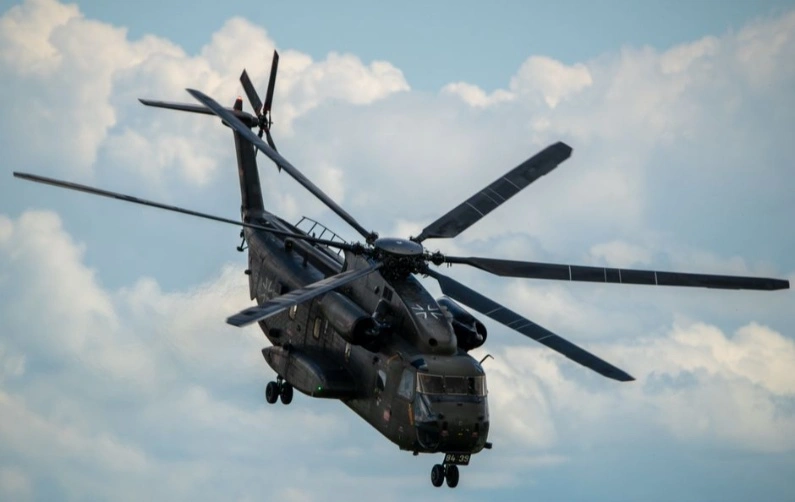
Record Orders in German Industry Driven by Defense Spending
Section: Politics
Leading anti-corruption prosecutors in Serbia have accused President Aleksandar Vucic of exerting improper influence on ongoing investigations into corruption and organized crime. The allegations arise amid ongoing anti-government protests that have been taking place for over a year in the country.
According to a joint statement issued by top prosecutors focused on combating corruption and organized crime, President Vucic has repeatedly criticized and undermined the judiciary through public comments. They contend that his recent remarks overstepped the constitutional and legal boundaries of his presidential authority, constituting an attempt to direct or intimidate the prosecutorial process.
President Vucic, responding to the protests and the judicial proceedings related to them, recently appeared on a pro-government television channel, where he characterized the majority of prosecutors as corrupt and raised similar concerns about the judiciary. He also questioned the legitimacy of the release of individuals detained during the protests, suggesting that those involved in violent acts were being freed without appropriate legal consequences.
The prosecutors' statement emphasizes that such public comments from the head of state, particularly regarding ongoing criminal proceedings, represent undue and unlawful attempts to sway judicial decisions. They warn that this undermines the independence of legal institutions and could erode public trust in the rule of law.
The backdrop to these tensions is the collapse of a railway station roof in Novi Sad, which resulted in the loss of 16 lives. The tragedy triggered widespread public outrage and demonstrations, initially focusing on demands for accountability for the incident. Over time, the protests expanded to address broader issues, including allegations of systemic corruption and demands for government transparency. University students have been at the forefront of these demonstrations, often calling for early elections as a solution to the ongoing crisis. However, President Vucic has consistently rejected these calls, maintaining that the protests are influenced by foreign interests and reiterating his refusal to permit snap elections.
Investigations into the railway station disaster began shortly after the incident, with the responsible prosecutor's office filing charges in September against 13 individuals, including the former Minister of Construction, Goran Vesic. Additionally, the European Public Prosecutor's Office (EPPO) is conducting a separate inquiry into the potential misuse of European Union funds allocated for the renovation of the station. Serbia, as a candidate country for EU accession, faces heightened scrutiny regarding the independence of its judiciary and the effectiveness of its anti-corruption efforts.
President Vucic's approach to foreign policy has also been a subject of debate, as he has sought to balance closer relations with the European Union and continued cooperation with Russia. This ambiguous stance has contributed to political uncertainty and divided opinions within Serbia and among international observers.
The ongoing dispute between the Serbian executive branch and the country's judicial authorities underscores the challenges facing the nation as it seeks to address public demands for reform, ensure judicial independence, and advance toward EU membership. As the protests persist and investigations proceed, the situation remains a critical test of Serbia's commitment to democratic principles and the rule of law.
Section: Politics
Section: Business
Section: Business
Section: Arts

Section: Business

Section: News
Section: Business

Section: News
Section: News
Section: Politics
Both private Health Insurance in Germany and public insurance, is often complicated to navigate, not to mention expensive. As an expat, you are required to navigate this landscape within weeks of arriving, so check our FAQ on PKV. For our guide on resources and access to agents who can give you a competitive quote, try our PKV Calculator.
Germany is famous for its medical expertise and extensive number of hospitals and clinics. See this comprehensive directory of hospitals and clinics across the country, complete with links to their websites, addresses, contact info, and specializations/services.
Didn't manage to get a ticket for Linkin Park? Or still not enough after the concert? Join us at CRASH on June 12th for our "IN THE END" Linkin Park Special + CORE NIGHT.All night long, we'll be playing Linkin Park's music, along with Nu Metal, Metalcore, and Alternative Rock from bands such as Limp...



No comments yet. Be the first to comment!