
Munich Signals Its Ambition at Plug and Play Tech Center AI Summit
Section: Business
The recent proposal from a governmental investigation suggests that property owners may be mandated to contribute financially towards enhancing safety measures in their neighborhoods. This initiative, which is backed by the Tidö Agreement, has raised concerns among various stakeholders, particularly homeowners who feel this could amount to a new form of property tax aimed at funding security initiatives.
Homeowners have expressed their discontent regarding the idea that individuals living in less secure areas would be required to pay both standard taxes and additional fees solely for the purpose of improving safety. The notion of mandatory contributions could disproportionately affect homeowners, especially in municipalities grappling with high crime rates and limited budgets.
Known as area collaboration, these safety initiatives may include hiring security personnel, partnering with local law enforcement, or enhancing street lighting and visibility by trimming overgrown vegetation. The specific interventions would be tailored to address the unique challenges of each community.
The proposed system for enforcing these fees could operate in two ways: either through the establishment of a homeowners' association initiated by property owners or via a municipal fee imposed by local governments. Under the homeowners' association model, at least three property owners would need to come together to form a group and then seek approval from the municipality to implement safety measures. In scenarios where only one home exists in a defined area, that particular owner could be exempt from the fees, but generally, all property owners within the designated area would be required to participate in funding these initiatives.
Every property owner within the area would be compelled to join the association, with costs for safety measures allocated based on property ownership shares, similar to how common property is managed. If a homeowner sells their property, they could opt out of the association and thus avoid the associated fees, provided the municipality agrees to the change. Typically, these associations would remain active for a minimum of five years before they could be disbanded.
This approach has been criticized as potentially misaligned with the fundamental social contract that assigns the responsibility of crime prevention and public safety to the state and, to some extent, local municipalities. The financing of these measures should ideally come from tax revenues, ensuring that all residents contribute to community safety.
While the government and the investigators behind this proposal view it as a fair solution to engage all property owners in safety efforts, many homeowners argue that it is unjust to require those living in less secure areas to pay additional fees on top of their regular taxes. They advocate for a system where safety measures are funded through taxation, thus distributing the financial responsibility more equitably across the community.
There is a strong likelihood that this proposal will face significant backlash from affected homeowners. It is anticipated that private individuals will express stronger opposition compared to commercial property owners due to the direct impact on their personal finances. Furthermore, the notion of being compelled to join an association may be perceived as particularly contentious. The term 'collaboration' could also be seen as provocative, given the circumstances.
Additionally, there is a concern that existing voluntary community safety collaborations that are currently effective could be undermined by this mandatory approach, creating further complications in community dynamics.
Section: Business
Section: Health Insurance

Section: News

Section: Arts

Section: Health

Section: Fashion

Section: Politics

Section: Fashion

Section: News

Section: Fashion
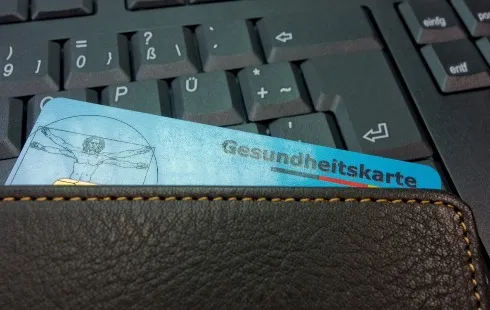
Both private Health Insurance in Germany and public insurance, is often complicated to navigate, not to mention expensive. As an expat, you are required to navigate this landscape within weeks of arriving, so check our FAQ on PKV. For our guide on resources and access to agents who can give you a competitive quote, try our PKV Cost comparison tool.
Germany is famous for its medical expertise and extensive number of hospitals and clinics. See this comprehensive directory of hospitals and clinics across the country, complete with links to their websites, addresses, contact info, and specializations/services.
Join us at the Kunstraum in der Au for the exhibition titled ,,Ereignis: Erzählung" by Christoph Scheuerecker, focusing on the captivating world of bees. This exhibition invites visitors to explore the intricate relationship between bees and their environment through various artistic expressions,...



No comments yet. Be the first to comment!