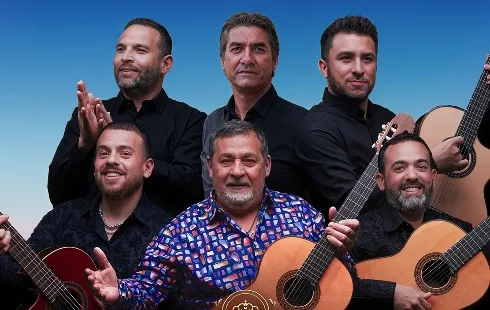
Gipsy Kings: "Music Is a Natural Way of Life"
Section: Arts
Major disruptions have occurred throughout Greece as farmers have launched widespread protests in response to delayed European Union subsidies. From the southern island of Crete to the northern border regions, farmers have blocked key transportation routes, airports, and ports, severely affecting the movement of goods and people across the country.
Farmers have positioned their tractors and livestock to block access to Crete's two largest airports, causing the cancellation of flights and preventing medical supplies from reaching the island. The main motorway connecting Athens and Thessaloniki has also faced temporary closures, leading to major traffic delays and the suspension of border transport to both Bulgaria and North Macedonia. Protesters have now shifted their focus to the critical port of Volos, one of Greece's largest, with the aim of halting its operations.
Clashes between demonstrators and law enforcement have been reported at several protest sites. Authorities have used tear gas in attempts to disperse crowds, particularly at key transportation hubs on Crete. In some instances, property damage has been reported, including overturned police vehicles during confrontations near Chania Airport.
The underlying cause of this unrest is the suspension of EU agricultural subsidy payments. Greek farmers have traditionally relied heavily on these subsidies, which form part of the EU's Common Agricultural Policy. However, payments for 2025 have been frozen pending the outcome of an extensive investigation into a large-scale corruption scandal. The inquiry has revealed that a number of individuals allegedly obtained fraudulent land ownership documents with the assistance of corrupt officials, allowing them to claim higher subsidies than they were entitled to. As a result, authorities have halted all payments until the investigation concludes.
In addition to financial uncertainty, Greek farmers are grappling with an acute outbreak of livestock diseases. Over 400,000 sheep and goats have been culled in response to the spread of viral infections, raising concerns about potential shortages of feta cheese--a product with protected designation of origin status, produced exclusively in Greece.
The impact of the protests has been felt beyond the farming sector. Hospitals on Crete have reported disruptions, with cancer surgeries postponed due to the inability to deliver essential medications while airports remain closed. This has fueled public frustration, as the blockades have hindered access to critical services for local communities.
Greek authorities have initiated legal action against those responsible for the blockades and violence. The Supreme Court prosecutor has ordered criminal investigations into protestors who have participated in road and airport closures and resorted to violent actions. Public debate has intensified, with some officials condemning the escalation and damage to public and private property, while others have called for dialogue to resolve the crisis.
The government has stated its willingness to engage with representatives of the farming community, provided they appoint an official delegation. Officials have reiterated their commitment to disbursing a total of EUR3.7 billion in EU subsidies later in December, once legal and administrative reviews are completed. Nevertheless, many farmers remain dissatisfied, continuing their blockades and strategizing further actions, including the planned closure of additional ports and transport routes in the coming days.
As the situation evolves, both the Greek government and the agricultural sector face mounting pressure to find a resolution that addresses the financial and operational challenges confronting rural communities, while minimizing the broader impact on the country's infrastructure and public services.
Section: Arts
Section: Fashion

Section: Health Insurance

Section: News

Section: Politics
Section: Business
Section: Health

Section: Arts
Section: Politics
Section: Business
Both private Health Insurance in Germany and public insurance, is often complicated to navigate, not to mention expensive. As an expat, you are required to navigate this landscape within weeks of arriving, so check our FAQ on PKV. For our guide on resources and access to agents who can give you a competitive quote, try our PKV Cost comparison tool.
Germany is famous for its medical expertise and extensive number of hospitals and clinics. See this comprehensive directory of hospitals and clinics across the country, complete with links to their websites, addresses, contact info, and specializations/services.
Didn't manage to get a ticket for Linkin Park? Or still not enough after the concert? Join us at CRASH on June 12th for our "IN THE END" Linkin Park Special + CORE NIGHT.All night long, we'll be playing Linkin Park's music, along with Nu Metal, Metalcore, and Alternative Rock from bands such as Limp...



No comments yet. Be the first to comment!