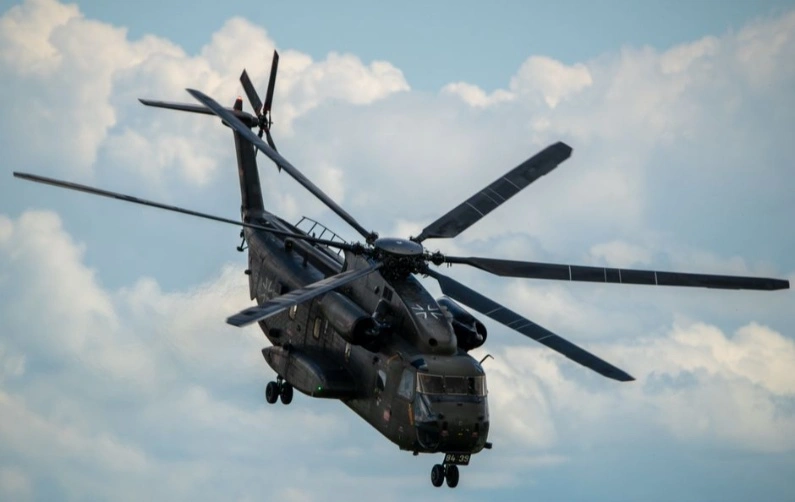
Record Orders in German Industry Driven by Defense Spending
Section: Politics
The European Union has announced a significant expansion of its police and border support mission in Gaza, aligning with international peace efforts aimed at stabilizing the region. EU Foreign Affairs Chief, Kaja Kallas, shared plans to train approximately 3,000 Palestinian security personnel to enhance law enforcement capabilities in the coastal territory, which was previously under the control of Hamas.
This initiative is part of a broader EU strategy to contribute to the reconstruction and stabilization of the Gaza Strip. According to internal EU documents, the long-term objective is to provide training for up to 13,000 police officers, responding to the anticipated security needs of the area. The EU intends to assume a leading role in the development of policing and public safety infrastructure within Gaza.
Initially, the mission, known as Eupol Copps, will focus on rebuilding judicial and security structures. Training programs for Palestinian police instructors are set to take place at a police academy in Jericho, with financial backing from Germany among other EU members. Any further expansion of training and operational duties will depend on the extension of the mission's mandate.
France has expressed readiness to deploy around 100 gendarmerie officers to support operations in Palestinian territories. Germany has also signaled its willingness to provide further practical assistance, building on its current contribution of a small team of experts to Eupol Copps.
The new police force is expected to work closely with an international stabilization contingent, as outlined by a recent United Nations Security Council resolution. This collaborative approach aims to replace the previous law enforcement structure, which operated under Hamas oversight, and ensure that security operations are integrated with wider international efforts.
In addition to police training, the EU is preparing to broaden its border management activities between Gaza, Israel, and Egypt. Plans include facilitating the flow of goods and people, with the potential to provide support at crossings such as Rafah and Kerem Shalom. The reactivation of the EU's border assistance mission at Rafah, originally established in 2005, is contingent on the reopening of the crossing following recent ceasefire agreements.
France has been a vocal advocate for expanding these missions, emphasizing the importance of secure humanitarian access to Gaza. EU officials believe that enhancing police and border functions could also support efforts to disarm militant groups and improve overall security conditions.
Beyond security, the EU is working with Egypt to organize a reconstruction conference for Gaza. New donor groups are being formed to guide and support reforms within the Palestinian Authority, with the aim of building administrative structures capable of governing Gaza in the future.
The US-led peace plan, endorsed by the UN Security Council, envisions an interim governance structure managed by a committee of independent Palestinian professionals and international experts. This body will be overseen by a newly established international board tasked with supervising the transition period and supporting the recovery of Gaza.
Section: Politics
Section: Business
Section: Business

Section: Arts

Section: Business

Section: News
Section: Business

Section: News
Section: News
Section: Politics
Both private Health Insurance in Germany and public insurance, is often complicated to navigate, not to mention expensive. As an expat, you are required to navigate this landscape within weeks of arriving, so check our FAQ on PKV. For our guide on resources and access to agents who can give you a competitive quote, try our PKV Calculator.
Germany is famous for its medical expertise and extensive number of hospitals and clinics. See this comprehensive directory of hospitals and clinics across the country, complete with links to their websites, addresses, contact info, and specializations/services.
Didn't manage to get a ticket for Linkin Park? Or still not enough after the concert? Join us at CRASH on June 12th for our "IN THE END" Linkin Park Special + CORE NIGHT.All night long, we'll be playing Linkin Park's music, along with Nu Metal, Metalcore, and Alternative Rock from bands such as Limp...



No comments yet. Be the first to comment!