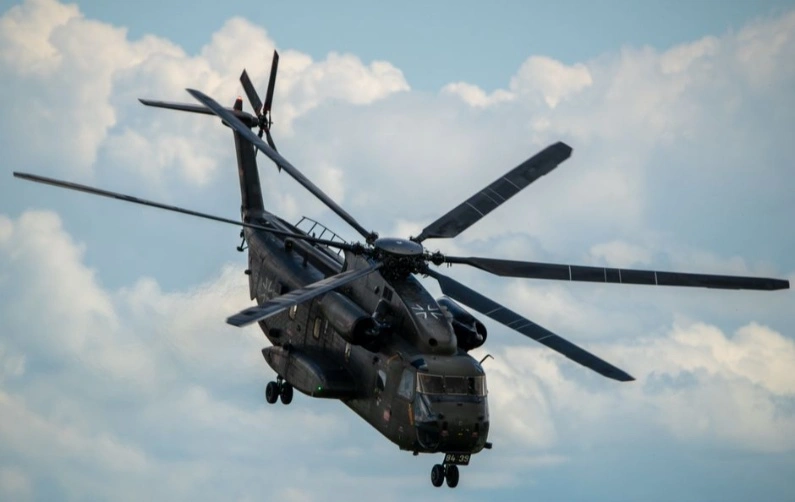
Record Orders in German Industry Driven by Defense Spending
Section: Politics
Austria's current approach to drone defense has recently come under scrutiny, with significant concerns being expressed about the nation's preparedness to address modern aerial threats. During a parliamentary debate, issues were highlighted regarding the lack of a comprehensive national strategy for protecting against drones, particularly as technological advancements accelerate and drone usage becomes increasingly prevalent in global conflicts.
One of the central points of discussion has been the apparent inadequacy of the current drone defense measures within the Austrian Armed Forces. While recent procurement of kinetic weapon systems, such as the Skyranger, marks a step forward, questions persist about their suitability, especially in urban environments and during peacetime. Such systems, designed for high-intensity conflict, may not be practical or deployable in densely populated areas where collateral damage is a critical concern.
The evolution of drone technology and its pivotal role in recent international conflicts, such as the ongoing war in Ukraine, has underscored the necessity for adaptable and up-to-date defense mechanisms. Despite these lessons, Austria reportedly lacks a cohesive national framework dedicated to countering unmanned aerial systems. This omission is seen as a significant vulnerability in the country's overall security infrastructure.
Criticism has also been directed at Austria's involvement in multinational defense initiatives, particularly the NATO-backed Sky-Shield project. Some experts argue that the systems deployed under this initiative, including advanced missile platforms like IRIS-T and Patriot, are not tailored to address the most common forms of drone threats. Utilizing such high-end missile defenses for small or commercially available drones is considered neither cost-effective nor efficient, drawing analogies to using disproportionate force for minor threats.
Regarding non-kinetic countermeasures, Austria's current arsenal appears limited. The military reportedly operates only two systems, known as ELDRO elements, which are designed to disrupt drone control signals and force unauthorized aircraft to land. However, these systems remain in the testing phase and are not widely deployed, raising questions about their operational readiness and scalability across the country.
Furthermore, there is noted absence of other modern counter-drone technologies, such as net launchers or interception drones, within the Austrian defense inventory. This gap highlights the broader issue of resource allocation and strategic planning in adapting to emerging security challenges.
Calls have been made for the immediate development and implementation of a national drone defense strategy. Proponents stress the importance of transparency and realistic communication with the public, acknowledging that while absolute protection against drones may not be attainable, significant improvements in defense posture are both necessary and achievable. It is emphasized that proactive policy-making and investment in suitable technologies are essential to safeguarding national security and public safety.
As Austria reviews its defense priorities, the debate underscores the broader European challenge of responding effectively to rapidly evolving drone threats. The focus remains on ensuring that defense policies and resources are aligned with the realities of contemporary security environments, balancing technological innovation with practical application and fiscal responsibility.
Section: Politics

Section: Business
Section: Business

Section: Arts

Section: Business

Section: News
Section: Business

Section: News
Section: News
Section: Politics
Both private Health Insurance in Germany and public insurance, is often complicated to navigate, not to mention expensive. As an expat, you are required to navigate this landscape within weeks of arriving, so check our FAQ on PKV. For our guide on resources and access to agents who can give you a competitive quote, try our PKV Calculator.
Germany is famous for its medical expertise and extensive number of hospitals and clinics. See this comprehensive directory of hospitals and clinics across the country, complete with links to their websites, addresses, contact info, and specializations/services.
Didn't manage to get a ticket for Linkin Park? Or still not enough after the concert? Join us at CRASH on June 12th for our "IN THE END" Linkin Park Special + CORE NIGHT.All night long, we'll be playing Linkin Park's music, along with Nu Metal, Metalcore, and Alternative Rock from bands such as Limp...



No comments yet. Be the first to comment!