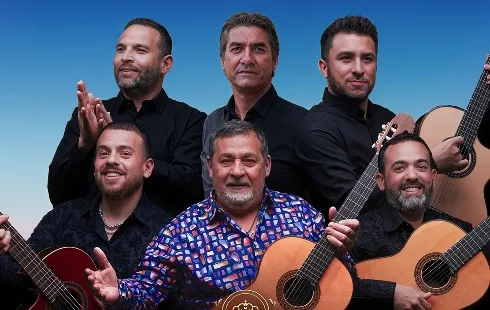
Gipsy Kings: "Music Is a Natural Way of Life"
Section: Arts
The ongoing discussions surrounding the parliamentary inquiry into the circumstances of Christian Pilnacek's death have taken a new turn, as tensions rise between Austria's major political parties. The Austrian People's Party (ÖVP) has raised concerns regarding potential political interference by the Freedom Party of Austria (FPÖ) in the operations of the country's ombudsman office.
Andreas Hanger, a member of parliament representing the ÖVP, has publicly announced an intent to examine any possible FPÖ involvement in the activities of the ombudsman institution. This development follows recent remarks from Christoph Luisser, an ombudsman nominated by the FPÖ, who highlighted alleged obstacles faced by the office while scrutinizing police procedures linked to the investigation of former Justice Ministry official Christian Pilnacek's death.
According to Luisser, his office had encountered difficulties obtaining requested documents from both the Ministry of the Interior and the Ministry of Justice. He asserted that such cooperation is essential for the ombudsman office to fulfill its constitutional responsibilities of oversight. However, the ÖVP has questioned whether these complaints reflect genuine institutional challenges or are influenced by broader political maneuvering.
Hanger has raised concerns about the impartiality of the ombudsman's office, suggesting that its current actions might align closely with the interests of the FPÖ. He has emphasized the importance of maintaining public trust in Austria's institutions, warning against any actions that could undermine the ombudsman's role as an objective watchdog.
The legal framework governing the ombudsman's access to official documents has become a focal point of the debate. While Luisser contends that all government ministries are constitutionally obligated to support the ombudsman in its inquiries, the ÖVP maintains that the constitution does not explicitly guarantee the right of the ombudsman to demand documentation in every circumstance. This interpretational dispute has brought increased scrutiny to the boundaries of institutional authority and oversight within Austria's political system.
Amid these developments, all parliamentary factions are positioning themselves in anticipation of the next stages of the inquiry. The FPÖ has continued to assert its commitment to transparency, while critics have accused the party of leveraging the ombudsman's office for political gain. The ombudsman, for his part, has refrained from making public statements regarding any connection between the challenges his office faces and his own party affiliation.
The ongoing inquiry into Christian Pilnacek's death, and the broader examination of how Austria's oversight mechanisms function, remain contentious issues in national politics. As the debate over political influence and institutional independence intensifies, calls for a clear and transparent resolution have grown among lawmakers and the public alike.
Observers note that the outcome of this dispute could have significant implications for the operation of parliamentary oversight, the autonomy of the ombudsman's office, and public confidence in the country's democratic institutions.
Section: Arts

Section: Fashion

Section: Health Insurance

Section: News

Section: Politics
Section: Business

Section: Health

Section: Arts
Section: Politics
Section: Business
Both private Health Insurance in Germany and public insurance, is often complicated to navigate, not to mention expensive. As an expat, you are required to navigate this landscape within weeks of arriving, so check our FAQ on PKV. For our guide on resources and access to agents who can give you a competitive quote, try our PKV Cost comparison tool.
Germany is famous for its medical expertise and extensive number of hospitals and clinics. See this comprehensive directory of hospitals and clinics across the country, complete with links to their websites, addresses, contact info, and specializations/services.
Didn't manage to get a ticket for Linkin Park? Or still not enough after the concert? Join us at CRASH on June 12th for our "IN THE END" Linkin Park Special + CORE NIGHT.All night long, we'll be playing Linkin Park's music, along with Nu Metal, Metalcore, and Alternative Rock from bands such as Limp...



No comments yet. Be the first to comment!