Bastille to Nation March Authorized for Saturday as Paris Curfew Continues Through the Weekend
Section: News
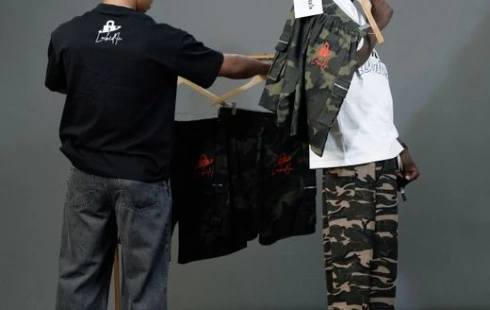
Camo print is returning to our closets, street style and runways, becoming a versatile piece in our rotation this autumn and adding a playful edge to our everyday wardrobes. But do we really know where this trend comes from, and more importantly, why is it coming back now?
Once designed for soldiers to disappear into their surroundings, camouflage has changed over the decades, being adopted by multiple subcultures, designers and pop culture, repeatedly shifting in meaning along the way. Today, it is no longer simply associated with military uniforms; for many, it has become just another print.
We live surrounded by images of war nowadays, on TikTok, X, Instagram, newspapers and across our screens. We are constantly exposed to conflict, violence and destruction, yet we have also developed an easy way of avoiding it. Sometimes, all it takes is a simple scroll to make it disappear from our view.
But have we become so accustomed to the imagery of war that we can now consume its aesthetics without thinking about what they represent?
Camouflage as we know it emerged during World War I. Around 1914,when the French artists Lucien Victor Guirand de Scévola began creating patterns to make military equipment harder to spot from the air.
By the 1960s and 70s, during the Vietnam War, camouflage began to take on a new meaning. Anti-war, pacifist and anti-imperialist movements adopted military garments and camouflage as a form of protest, turning a symbol of war into one of resistance and political expression.
Around the 1980s, the pattern became increasingly popular among young rappers and skaters, partly because military clothing was affordable, durable and easily available at army surplus stores. Its aesthetic also fit naturally with hip-hop's themes of resistance and toughness, as well as its preference for boxy, loose and oversized silhouettes.
Then came the mainstream era of the 1990s, when camo was everywhere, from Tupac to Bratz dolls, crossing over into grunge, skate culture and pop. Brands like BAPE pushed it even further, experimenting with bright colours and turning a pattern designed for concealment into a recognizable fashion statement. By the early 2000s, designers such as Jean Paul Gaultier or John Galliano were bringing camouflage to the runway, cementing its place in high fashion.
Camouflage now exists without its original context. For many consumers, it is simply a pattern, something with no meaning beyond being trendy on TikTok. With the ease of a click, we can buy it from ultra-fast fashion brands such as Shein from the comfort of our beds, without questioning what it represents, using it as a statement piece to elevate our looks or simply as a nostalgic reference to the early 2000s.
Somewhere between the battlefield, the protests movements, subcultures and runways, camouflage stopped being a uniform and became just another print.
But what happens when a symbol born for war becomes so familiar that we stop giving it the meaning that originally has? Can cultural context around a symbol be enough to change its meaning? Or do the trends we embrace still reflect something about the moment we are living through?
This autumn, camouflage is playful, nostalgic, cool, and everywhere. And perhaps that is exactly what makes its return worth questioning.
Section: News
Section: News
Section: Politics

Section: Politics

Section: News
Section: News

Section: Business

Section: Science

Section: Business

Section: Business
Both private Health Insurance in Germany and public insurance, is often complicated to navigate, not to mention expensive. As an expat, you are required to navigate this landscape within weeks of arriving, so check our FAQ on PKV. For our guide on resources and access to agents who can give you a competitive quote, try our PKV Calculator.
Germany is famous for its medical expertise and extensive number of hospitals and clinics. See this comprehensive directory of hospitals and clinics across the country, complete with links to their websites, addresses, contact info, and specializations/services.
Didn't manage to get a ticket for Linkin Park? Or still not enough after the concert? Join us at CRASH on June 12th for our "IN THE END" Linkin Park Special + CORE NIGHT.All night long, we'll be playing Linkin Park's music, along with Nu Metal, Metalcore, and Alternative Rock from bands such as Limp...



No comments yet. Be the first to comment!