
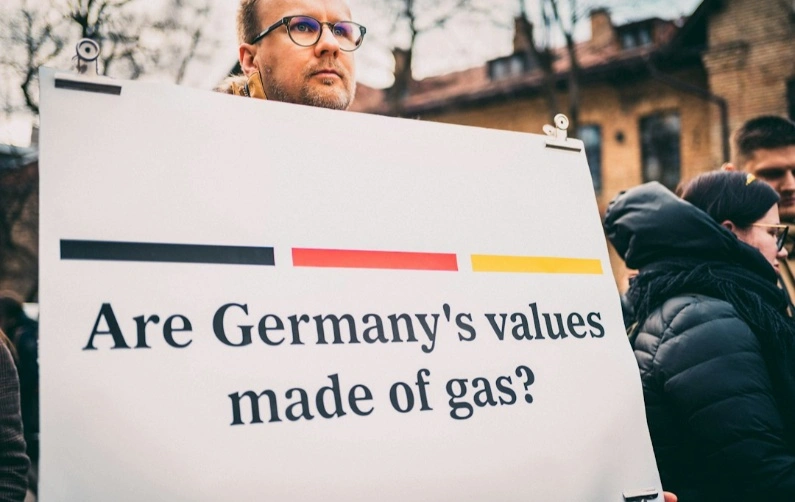
Former German Chancellor Schröder criticised for attending Putin's birthday
Section: News
A recent study conducted in London has highlighted the significant effectiveness of a lung cancer early detection program. The research indicates that 80% of diagnosed cases were identified at an early, treatable stage. This finding is especially beneficial for socioeconomically disadvantaged groups.
The study, published in the medical journal Lancet Oncology, involved a population of smokers from diverse and lower-income neighborhoods in London. According to the study, one in every fifty smokers who participated in the early detection program, which utilized low-dose computed tomography (CT), was diagnosed with lung cancer, predominantly in stages I or II where treatment is most effective.
Out of 12,733 participants, 618 individuals exhibited suspicious nodules on their CT scans, leading to a diagnosis of lung cancer in 261 cases. Remarkably, 207 of these cancers, accounting for approximately 79.3%, were found in stages I or II, where the chances of successful treatment are significantly higher.
In contrast, experts in Austria are voicing concerns over the lack of similar initiatives. A lung specialist has pointed out that while lung cancer mortality rates are alarmingly high in Austria, only 25% of cases are diagnosed at stages I and II. The remaining cases are detected at more advanced stages, which drastically reduces survival rates.
Statistically, Austria sees around 5,000 new lung cancer diagnoses annually, with approximately 4,000 associated deaths. The current system of detection means that nearly half of the cases are identified at stage IV, where the prognosis is particularly poor. The expert advocates for the implementation of a targeted lung cancer screening program using regular low-dose CT scans, particularly for individuals aged 55 and older who are smokers.
Research has shown that annual screenings can significantly reduce overall mortality rates. Studies indicate that such programs have been instrumental in reducing lung cancer mortality by about 45% in participant populations. The five-year survival rate for lung cancer diagnosed at stage I is around 80%, while it plummets to between 5% and 10% for stage IV cases.
Several European countries, including Norway, the UK, Germany, Hungary, Poland, and Croatia, have successfully implemented national early detection programs for lung cancer. In contrast, Austria has yet to establish such a system, despite significant financial resources allocated for advanced treatments for advanced lung cancer cases.
Comparative data from Germany also supports the findings of the London study, with a marked increase in the detection of early-stage lung cancers following the introduction of screening programs. The proportion of newly diagnosed cases in stages I and II rose significantly, showcasing the potential impact of early detection initiatives.
Section: News

Section: Science

Section: Business

Section: Business

Section: Science

Section: News

Section: Politics
Section: News

Section: Fashion

Section: Arts
Both private Health Insurance in Germany and public insurance, is often complicated to navigate, not to mention expensive. As an expat, you are required to navigate this landscape within weeks of arriving, so check our FAQ on PKV. For our guide on resources and access to agents who can give you a competitive quote, try our PKV Calculator.
Germany is famous for its medical expertise and extensive number of hospitals and clinics. See this comprehensive directory of hospitals and clinics across the country, complete with links to their websites, addresses, contact info, and specializations/services.
Didn't manage to get a ticket for Linkin Park? Or still not enough after the concert? Join us at CRASH on June 12th for our "IN THE END" Linkin Park Special + CORE NIGHT.All night long, we'll be playing Linkin Park's music, along with Nu Metal, Metalcore, and Alternative Rock from bands such as Limp...



No comments yet. Be the first to comment!