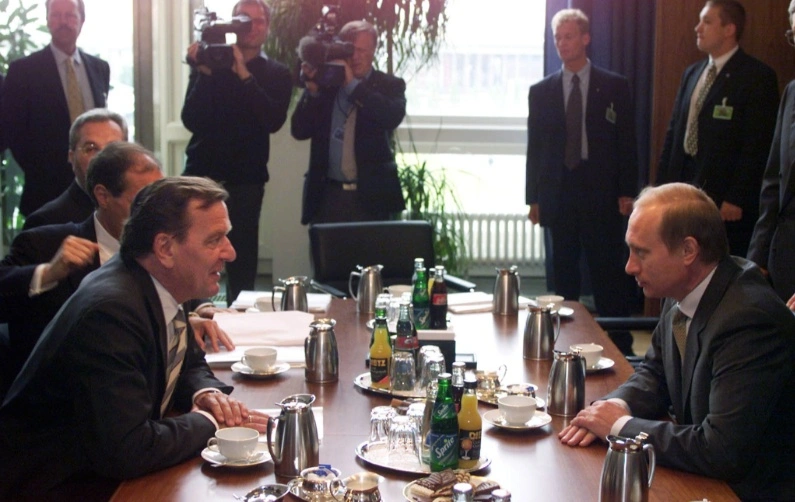
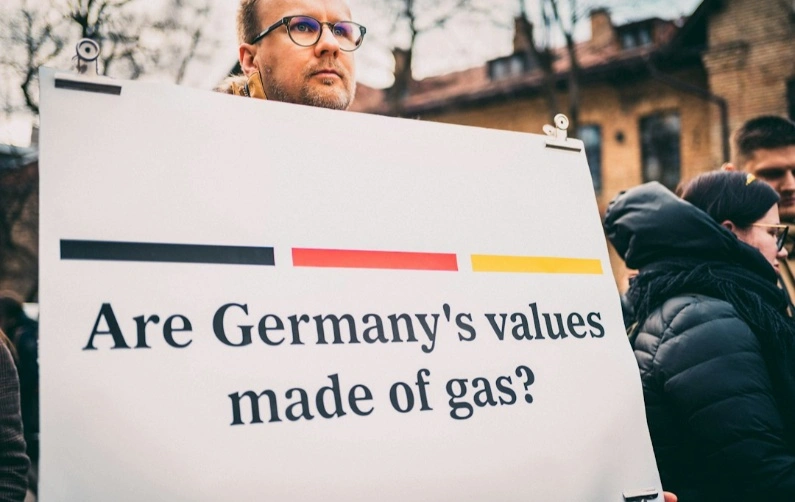
Former German Chancellor Schröder criticised for attending Putin's birthday
Section: News
Following significant political changes, Lithuania has appointed Mindaugas Sinkevicius, leader of the Social Democratic Party, as the country's new prime minister. The decision came after the previous coalition government dissolved, prompting President Gitanas Nauseda to confirm Sinkevicius for the top executive position. Sinkevicius, who has previously served a brief term as Minister for the Economy, replaces his party colleague Inga Ruginiene at the helm of the government.
The breakdown of the earlier political alliance resulted from disagreements within the coalition, especially concerning defense policy. Early in June, the Social Democrats announced the removal of the populist party Ausra prie Nemuno (translated as Dawn Over the Nemunas) from the coalition. The Social Democrats cited growing differences over defense priorities and accused Ausra prie Nemuno's leader, Remigijus Zemaitaitis, of adopting increasingly radical positions. Zemaitaitis had previously faced legal consequences after being convicted by a court for inciting hatred against Jewish people and minimizing the Holocaust, further straining relationships within the former coalition.
The newly formed coalition now includes the Social Democrats, the Union of Farmers, Greens and Christian Families, and the Democrats For Lithuania. Together, these groups have secured a parliamentary majority, holding 75 out of 141 seats in Lithuania's legislative body. While the formal signing of the new coalition agreement remains pending, the alliance is poised to assume leadership, subject to the president's final approval.
One of the pivotal points in the new coalition's agenda is a strong commitment to maintaining previously agreed upon defense spending. Lithuania, a former Soviet republic, remains a member of both the European Union and NATO, and has been a steadfast supporter of Ukraine amid ongoing Russian military aggression. The country regards its defense policy as central to national security, especially given regional tensions and its proximity to Russia and Belarus.
The Social Democrats have emphasized the importance of upholding Lithuania's international commitments, particularly those concerning defense allocations. This stance comes as NATO allies have repeatedly stressed the need for member states to meet or exceed agreed defense spending targets, a priority that has gained further urgency since the escalation of conflict in Ukraine. Ensuring that defense budgets are maintained at appropriate levels will likely remain a central issue for the new government, with parliamentary debates expected as the coalition shapes its legislative program.
Besides defense, the coalition parties have highlighted intentions to address various domestic policy areas, including economic stability, social welfare, and environmental initiatives. Cooperation among the Social Democrats, the Union of Farmers, Greens and Christian Families, and the Democrats For Lithuania is expected to focus on both internal reforms and external commitments, reflecting the coalition's diverse political backgrounds and priorities.
The formalization of the coalition agreement and the next steps in government formation are anticipated soon. As Lithuania transitions to new leadership, observers will be closely monitoring how the coalition manages key policy areas and navigates the challenges posed by a shifting regional security landscape. The country's alignment with European and transatlantic partners will likely continue to shape its strategic decisions in the months ahead.
Section: News

Section: Science
Section: Business

Section: Business
Section: Science

Section: News
Section: Politics
Section: News

Section: Fashion
Section: Arts
Both private Health Insurance in Germany and public insurance, is often complicated to navigate, not to mention expensive. As an expat, you are required to navigate this landscape within weeks of arriving, so check our FAQ on PKV. For our guide on resources and access to agents who can give you a competitive quote, try our PKV Calculator.
Germany is famous for its medical expertise and extensive number of hospitals and clinics. See this comprehensive directory of hospitals and clinics across the country, complete with links to their websites, addresses, contact info, and specializations/services.
Didn't manage to get a ticket for Linkin Park? Or still not enough after the concert? Join us at CRASH on June 12th for our "IN THE END" Linkin Park Special + CORE NIGHT.All night long, we'll be playing Linkin Park's music, along with Nu Metal, Metalcore, and Alternative Rock from bands such as Limp...



No comments yet. Be the first to comment!