
German companies unprepared for AI-based cyber attacks
Section: Science
The Iranian military leadership has declared the closure of the Strait of Hormuz to maritime traffic, a move announced following recent Israeli military operations in Lebanon. This action, communicated via Iranian state television, is described as a direct response to what Iran perceives as a breach of a recently established understanding between Tehran and Washington.
The agreement in question, signed earlier in the week by the United States and Iran, stipulated a cessation of military activities on all fronts, including those involving Lebanese territory. Despite this accord, hostilities have persisted, with reports indicating that exchanges of fire continued on both Friday and Saturday. Notably, both Hezbollah and Israel had previously agreed to a ceasefire, yet violence resumed, leading to further casualties.
According to Lebanon's civil defense authorities, 16 individuals lost their lives in the latest series of Israeli strikes that occurred overnight into Saturday. The Israeli military has reported that its operations were in retaliation for projectiles launched by Hezbollah. These renewed clashes have cast uncertainty over the effectiveness of the ceasefire and the broader agreement aimed at reducing regional tensions.
Following the Iranian statement regarding the closure of the Strait of Hormuz, Iranian state media also reported that a delegation would be dispatched to Switzerland for diplomatic discussions with the United States. The United States Vice President, JD Vance, has indicated plans to travel to Switzerland shortly to participate in talks with the Iranian delegation. Pakistan, serving as a mediator, confirmed that follow-up negotiations are scheduled to take place in Bürgenstock, Switzerland, on Sunday. Representatives from the United States, Iran, Pakistan, and Qatar are expected to be present for these discussions, which are intended as a continuation of the efforts to implement the new understanding reached earlier in the week.
In public comments, Vice President Vance stated that there was no direct evidence at that time to suggest the Strait of Hormuz had been closed, even as Iranian military officials and the Islamic Revolutionary Guard Corps insisted that the strait was no longer open to maritime traffic. This divergence underscores the complex and rapidly evolving situation in the region.
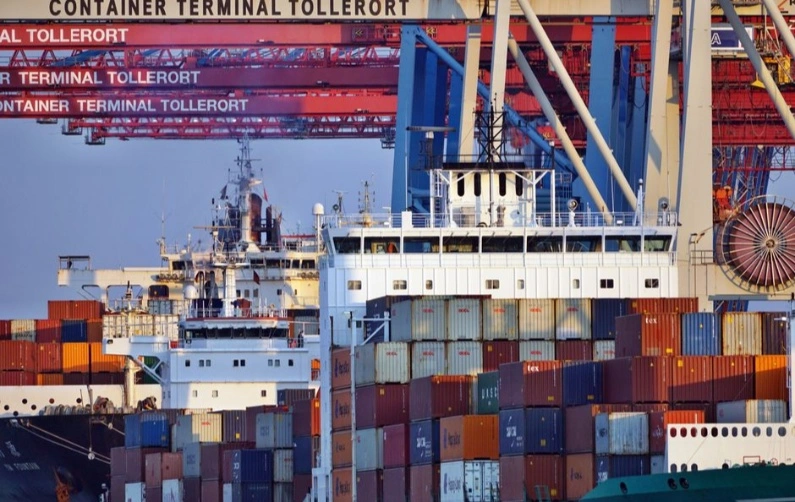
The closure of the Strait of Hormuz is particularly significant due to its strategic role as a key maritime passage for international oil shipments. Any disruption to vessel movement through the strait could have major implications for global energy markets and shipping industries. Prior to Saturday's announcement, traffic through the strait had reportedly increased, with 25 vessels passing on Thursday, marking the highest level of activity since mid-April. This uptick followed initial signs of reduced tensions after the US-Iran agreement, but the latest developments indicate a renewed risk of escalation.
The ongoing conflict between Israel and Hezbollah remains a focal point of concern, with both sides exchanging fire despite diplomatic efforts to de-escalate. The recent fatalities in Lebanon add to the urgency of the scheduled talks in Switzerland, where stakeholders hope to reinforce commitments and prevent further conflict. The participation of multiple regional actors--including Pakistan and Qatar--highlights the international community's interest in stabilizing the situation and ensuring the safety of vital shipping lanes.
As diplomatic efforts continue, the situation at the Strait of Hormuz and the wider Middle East remains fluid. The outcome of the upcoming discussions in Switzerland is likely to influence both regional security and global economic stability in the days ahead.
Section: Science
Section: Business

Section: Business

Section: Science

Section: News

Section: Politics

Section: News

Section: Fashion

Section: Arts

Section: Fashion
Both private Health Insurance in Germany and public insurance, is often complicated to navigate, not to mention expensive. As an expat, you are required to navigate this landscape within weeks of arriving, so check our FAQ on PKV. For our guide on resources and access to agents who can give you a competitive quote, try our PKV Calculator.
Germany is famous for its medical expertise and extensive number of hospitals and clinics. See this comprehensive directory of hospitals and clinics across the country, complete with links to their websites, addresses, contact info, and specializations/services.
Didn't manage to get a ticket for Linkin Park? Or still not enough after the concert? Join us at CRASH on June 12th for our "IN THE END" Linkin Park Special + CORE NIGHT.All night long, we'll be playing Linkin Park's music, along with Nu Metal, Metalcore, and Alternative Rock from bands such as Limp...



No comments yet. Be the first to comment!