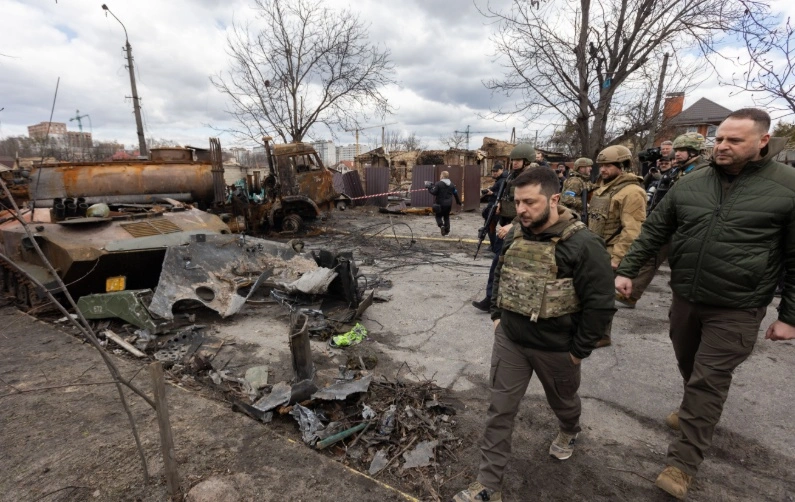
Zelensky urges US to enforce limited ceasefire
Section: Politics
The International Monetary Fund (IMF) has significantly raised its economic growth forecast for Germany, predicting a 1.3% expansion in the country's gross domestic product (GDP) for this year. This adjustment reflects an increase of 0.6 percentage points from the IMF's previous projection in July and aligns with the German government's own expectations.
This upward adjustment for Germany comes as part of the IMF's broader assessment of the global economy. The organization has also moderately increased its forecast for global economic growth, now predicting a 3.1% uptick this year, a rise of 0.1 percentage points. Additionally, the IMF's outlook for the eurozone has been adjusted to 1.1% growth, an increase of 0.2 percentage points.
For the upcoming year, the IMF anticipates a 1.1% growth in Germany's economy, representing a marginal increase of 0.1 percentage points from its last forecast. These revised estimates indicate a more optimistic view of economic development compared to earlier assessments in the spring.
In its latest report, the IMF has stated that the anticipated slowdown in global economic growth may not be as pronounced as previously expected. This view is attributed to the resilience shown by industrialized nations amid rising energy prices following conflicts in regions such as Iran.
The report also highlights a divide between wealthier and poorer nations, especially concerning advancements in artificial intelligence (AI). While many developed countries have seen economic benefits from investments in AI, others have not been able to capitalize on this trend. Countries with limited access to AI advancements face challenging decisions as they contend with increasing energy costs, the IMF pointed out.
The IMF's Chief Economist, Silvana Tenreyro, described the economic outlook as "bifurcated" during her presentation of the latest forecasts. She noted, "The world economy has shown resilience, but this resilience is under strain, and the risks to growth are tilted more toward the downside."
In consideration of these findings, the IMF advises caution regarding potential global economic risks. The fund's outlook emphasizes the continuing impact of rising energy prices and geopolitical tensions, which could further affect economic stability. This perspective is significant as it aligns with broader discussions about how global incidents, like regional conflicts and technological booms, shape economic landscapes.
Germany’s revised growth outlook stems partly from adapting to new economic conditions determined by global energy price fluctuations. The IMF also emphasizes the resilience of the German economy, which has managed to withstand various pressures, including supply chain disruptions and evolving international trade dynamics.
The increased forecast for the eurozone overall reflects similar factors, underscoring a shift towards technological investments while grappling with energy constraints. These findings align with broader global challenges, particularly the disparities between technology adopters and those lagging behind.
The IMF report serves as a reminder of these ongoing issues, delineating the contrasting experiences across nations. As some countries invest heavily in AI and reaps the benefits, others face barriers to entry, highlighting a continued divide in technological access and utilization globally.
In light of these projections, stakeholders are advised to consider the IMF's recommendations for strengthening economic policies that can buffer against potential downturns. Policymakers may focus on mitigating risks associated with energy price volatility and fostering economic environments that capitalize on technological advancements.
This cautious outlook suggests a need for international cooperation to address shared challenges, such as sustainable energy solutions and inclusive technological growth. As the global economy navigates these complexities, the IMF's forecasts provide important insights into strategic adjustments that could influence future economic trends.
Section: Politics
Section: News
Section: News

Section: Science
Section: Business
Section: Business
Section: Science

Section: News
Section: Politics
Section: News
Both private Health Insurance in Germany and public insurance, is often complicated to navigate, not to mention expensive. As an expat, you are required to navigate this landscape within weeks of arriving, so check our FAQ on PKV. For our guide on resources and access to agents who can give you a competitive quote, try our PKV Calculator.
Germany is famous for its medical expertise and extensive number of hospitals and clinics. See this comprehensive directory of hospitals and clinics across the country, complete with links to their websites, addresses, contact info, and specializations/services.
Didn't manage to get a ticket for Linkin Park? Or still not enough after the concert? Join us at CRASH on June 12th for our "IN THE END" Linkin Park Special + CORE NIGHT.All night long, we'll be playing Linkin Park's music, along with Nu Metal, Metalcore, and Alternative Rock from bands such as Limp...



No comments yet. Be the first to comment!