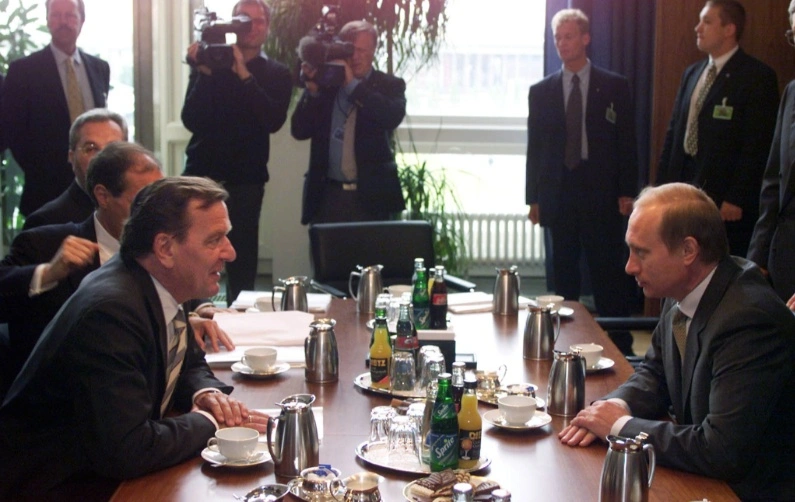
Former German Chancellor Schröder criticised for attending Putin's birthday
Section: News
The German parliament, the Bundestag, convened a special session on October 9, 2026, to address the controversial election of politicians from the Alternative for Germany (AfD) party to the presidium of the state parliament in Saxony-Anhalt. The session was prompted by the growing concerns among lawmakers about the influence of the far-right party in regional governments.
The AfD's recent successes in regional elections have sparked significant debate within the Bundestag. The special session was called by lawmakers, including members of The Left party, who expressed apprehension over the AfD's increasing foothold in German politics. Concerns were particularly focused on how these developments might affect Germany's democratic institutions and societal values.
The election of AfD members to key positions in Saxony-Anhalt's parliamentary presidium has added to ongoing tensions between the AfD and other political parties across Germany. The party, known for its anti-immigration stance and eurosceptic views, has been a contentious presence in German politics since it first gained seats in the Bundestag in 2017.
Ines Jacobi, reporting for ARD from Berlin, emphasized the heightened scrutiny facing the AfD in light of these elections. Political leaders from various parties expressed their perspectives during the session, with many insisting on the need to uphold democratic norms against the backdrop of the AfD's rising popularity.
During the debate, lawmakers from The Left and other parties highlighted what they described as the AfD's divisive rhetoric and policies, which they argued conflict with the core values of Germany's democratic framework. The session included discussions on how to address the political and social implications of the AfD's influence.
President of the Bundestag, Bärbel Bas, confirmed that the special session was necessary to discuss the implications of the AfD's political strategies and their impact on both regional and federal levels. She underscored the importance of safeguarding democratic processes and ensuring that all political parties uphold the principles of the German constitution.
The session was marked by vigorous debate among representatives, with various parties articulating their stances on the AfD's role in regional government. The debate reflected broader national concerns over the shifting political landscape in Germany and the emergence of populist parties.
Opposition leaders called for a united front against what they perceive as the erosion of democratic values posed by the AfD. They urged for a comprehensive strategy to counteract the party's influence and to reaffirm commitment to human rights and inclusive policies.
AfD representatives, meanwhile, defended their right to participate in the democratic process, insisting that their election to the presidium positions was a legitimate expression of the electorate’s will. They accused the other parties of trying to undermine the democratic decision-making process through undue criticism and opposition.
The special session in the Bundestag is part of a broader dialogue in Germany regarding the role of emerging political parties and how to balance democratic inclusivity with safeguarding the integrity of the political system. The discussions continue to reveal deep divisions within German politics over how to handle the rise of the AfD.
This development in Saxony-Anhalt is seen by many as a microcosm of the challenges facing German democracy today. The Bundestag's debate highlighted the need for ongoing vigilance and dialogue in preserving the democratic fabric amidst significant political shifts.
Source: tagesschau.de
Section: News

Section: Science
Section: Business

Section: Business
Section: Science

Section: News
Section: Politics
Section: News

Section: Fashion
Section: Arts
Both private Health Insurance in Germany and public insurance, is often complicated to navigate, not to mention expensive. As an expat, you are required to navigate this landscape within weeks of arriving, so check our FAQ on PKV. For our guide on resources and access to agents who can give you a competitive quote, try our PKV Calculator.
Germany is famous for its medical expertise and extensive number of hospitals and clinics. See this comprehensive directory of hospitals and clinics across the country, complete with links to their websites, addresses, contact info, and specializations/services.
Didn't manage to get a ticket for Linkin Park? Or still not enough after the concert? Join us at CRASH on June 12th for our "IN THE END" Linkin Park Special + CORE NIGHT.All night long, we'll be playing Linkin Park's music, along with Nu Metal, Metalcore, and Alternative Rock from bands such as Limp...



No comments yet. Be the first to comment!