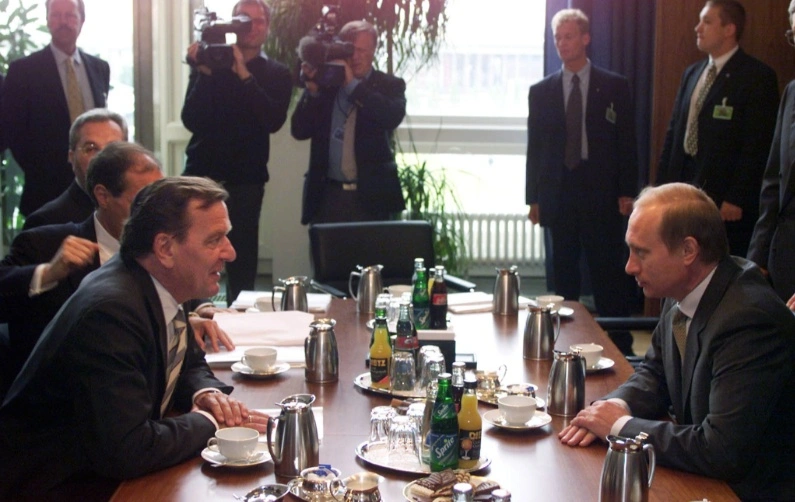
Former German Chancellor Schröder criticised for attending Putin's birthday
Section: News
Starting in October, the training program for primary school teachers in Austria will undergo significant reforms. The duration of the Bachelor's program will be reduced from four years to three, while the Master's program will be extended from one year to two. A key component of this new structure is the inclusion of mandatory courses in both German as a foreign language and English for all students.
According to Andreas Schnider, chairman of the Quality Assurance Council (QSR), the latest updates to the curriculum address the changes that have occurred over the past decade, including advancements in digital technology and the influx of refugees. The QSR played an integral role in the development of these curricula, focusing on critical themes such as artificial intelligence, digitalization, diversity, and inclusion, which encompasses multilingualism and intercultural understanding.
Additionally, the new curriculum aims to adapt to the evolving needs of parents, particularly in light of recent immigration trends, and emphasizes a more practical approach to school law. Schnider expressed satisfaction with the implementation of these new plans, noting that the pedagogical universities have effectively managed the transition. He highlighted improvements in aligning theory with practice, surpassing the performance of some universities.
For the first time, the new legislation mandates specific thematic focuses that every pedagogical university must include in its offerings. All future primary teachers are now required to take a course in German as a foreign language, reflecting the current demographic changes in schools due to the arrival of many non-native speakers. Intercultural education is also emphasized across various areas, particularly in parental engagement.
English language instruction will be featured in nearly every semester of the new program. Starting from the academic year 2025/26, English will transition from being a mandatory exercise to a core subject in the third grade, which will be graded. The following year, this requirement will extend to fourth-grade classes as well.
Furthermore, pressing social issues such as violence prevention and anti-discrimination will receive more attention in the new curricula, interwoven throughout different educational courses. In response to feedback from teacher representatives and new educators, there is a renewed focus on practical experience within the training program. This includes the introduction of a two-week summer school where students can engage in independent teaching, along with a comprehensive four-week practical block in a school during the fifth or sixth semester, just before completing their Bachelor's degree.
These practical components aim to enhance collaboration between universities, schools, and educational authorities, which is crucial for ensuring successful internships. Schnider pointed out that the effectiveness of these placements relies heavily on the cooperation of school directors and administration.
Another goal of the reforms is to make the Master's program more conducive to part-time students. The current structure demonstrates a commitment to increasing flexibility and accessibility in teacher education. Schnider emphasized that the optimal scenario would involve new teachers beginning their careers after completing their Bachelor's degree while simultaneously pursuing their Master's studies, aligning with earlier reform intentions from 2014.
He noted that evaluations indicate the greatest gains in competency occur when educators are actively teaching and receiving support from their school's leadership. However, he acknowledged that further development is needed for Master's programs to ensure they align closely with the practical realities teachers face and can be pursued alongside employment. While there is recognition of the current staffing shortages leading to overwhelming workloads for new teachers, it remains essential to cultivate a culture where educators continually reflect on their practices.
Incorporating topics such as parental involvement and educational law into the Master's curriculum in a practical context is fundamental to enhancing the overall quality of teacher training.
Section: News

Section: Science

Section: Business

Section: Business
Section: Science

Section: News
Section: Politics
Section: News

Section: Fashion
Section: Arts
Both private Health Insurance in Germany and public insurance, is often complicated to navigate, not to mention expensive. As an expat, you are required to navigate this landscape within weeks of arriving, so check our FAQ on PKV. For our guide on resources and access to agents who can give you a competitive quote, try our PKV Calculator.
Germany is famous for its medical expertise and extensive number of hospitals and clinics. See this comprehensive directory of hospitals and clinics across the country, complete with links to their websites, addresses, contact info, and specializations/services.
Didn't manage to get a ticket for Linkin Park? Or still not enough after the concert? Join us at CRASH on June 12th for our "IN THE END" Linkin Park Special + CORE NIGHT.All night long, we'll be playing Linkin Park's music, along with Nu Metal, Metalcore, and Alternative Rock from bands such as Limp...



No comments yet. Be the first to comment!