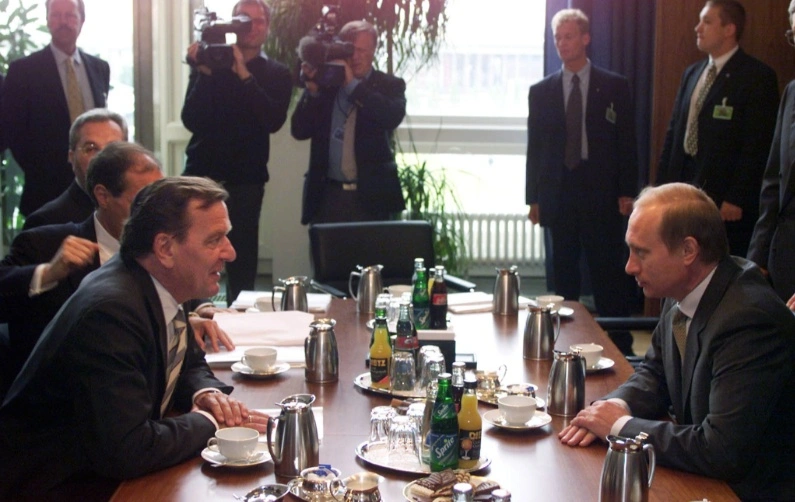
Former German Chancellor Schröder criticised for attending Putin's birthday
Section: News
England has expanded its declared drought area to encompass 82% of its land following a scorching summer that saw record-breaking heatwaves and persistent dry conditions, according to the UK's Environment Agency. This move includes the addition of Yorkshire to the list of regions experiencing severe dryness. As a result of these changes, only two regions in northern England remain without a formal drought designation, though they are still considered to be in a prolonged dry period.
The Environment Agency has reported that reservoirs and rivers across the country have seen significant drops in water levels, leading to the drought declaration. Particularly affected is the Hanningfield reservoir, where water levels are critically low, reflecting a widespread issue as reservoir storage across England stands at only 55% of expected capacity, significantly below the typical rate of 74.3% for this time of year.
Forecasters have indicated that England, like much of Europe, is suffering through 2026's hottest summer since records began. A succession of heatwaves has contributed to the unusually dry conditions, with only 65% of the normal September rainfall recorded. This prolonged dryness has exacerbated water shortages and increased the pressure on authorities to manage dwindling supplies.
A spokesperson for the Environment Agency emphasized that the current drought situation is far from over. The recovery of reservoir and groundwater levels depends on a sustained period of rainfall, which is currently absent. The agency is closely monitoring the situation and continuing to implement strategies to mitigate the effects of water shortages across affected regions.
The decision to declare Yorkshire a drought area highlights the severity of the water crisis facing the country. Despite the formal drought designations, even regions without this status are grappling with the consequences of water scarcity. The agency's declaration acts as a critical measure, aiming to conserve water and manage resources effectively as the country anticipates continued dry conditions.
In response to the ongoing drought, local authorities and water companies have been encouraging residents in affected areas to reduce water usage. Measures such as water use restrictions may become more common if the dry spell extends further. Households are being urged to conserve water by minimizing non-essential usage, such as watering gardens or washing cars.
England's experience is part of a broader pattern of extreme weather events attributed to climate change impacting multiple regions globally. The situation has spurred policy discussions and debates on improving water management systems and boosting infrastructure resilience to cope with increased pressure from climate variability.
Climate experts cite these conditions as a stark example of the potential future scenarios that the UK and other countries may encounter as global temperatures rise. Efforts are being concentrated on creating adaptive measures and sustainable practices to shield against such environmental stresses in the future.
Looking ahead, meteorologists are cautiously optimistic about possible rainfall in the coming months that might help alleviate some of the immediate concerns. However, they warn that without significant and consistent rainfall, the recovery of water bodies might take more extended periods than anticipated, prolonging the impact of the current drought conditions.
As England grapples with these challenges, collaboration among governmental agencies, local communities, and environmental groups remains vital in developing effective solutions to mitigate the adverse effects of water scarcity. Strategic planning and public cooperation are seen as crucial factors in navigating through this environmental crisis and preparing for future uncertainties.
Source: spiegel.de
Section: News

Section: Science
Section: Business

Section: Business
Section: Science
Section: News
Section: Politics
Section: News

Section: Fashion
Section: Arts
Both private Health Insurance in Germany and public insurance, is often complicated to navigate, not to mention expensive. As an expat, you are required to navigate this landscape within weeks of arriving, so check our FAQ on PKV. For our guide on resources and access to agents who can give you a competitive quote, try our PKV Calculator.
Germany is famous for its medical expertise and extensive number of hospitals and clinics. See this comprehensive directory of hospitals and clinics across the country, complete with links to their websites, addresses, contact info, and specializations/services.
Didn't manage to get a ticket for Linkin Park? Or still not enough after the concert? Join us at CRASH on June 12th for our "IN THE END" Linkin Park Special + CORE NIGHT.All night long, we'll be playing Linkin Park's music, along with Nu Metal, Metalcore, and Alternative Rock from bands such as Limp...


No comments yet. Be the first to comment!